
Few video game franchises have left as indelible a mark on visual culture as Tomb Raider. Since its debut in 1996, the series has been celebrated not only for its adventurous gameplay but also for its striking artistry, which helped define Lara Croft as one of gaming’s most iconic figures. The original vision was spearheaded by Toby Gard, who conceptualised Lara Croft as a bold, intelligent adventurer rather than a stereotypical action hero. Behind him stood the talented team at Core Design, including programmers like Paul Douglas, Gavin Rummery, and Jason Gosling, as well as level designers Neil Boyd and Heather Gibson, composer Nathan McCree, and FMV artist Peter Bernard. Their collective contributions brought to life a world of ancient ruins, striking landscapes, and cinematic storytelling.
The art of Tomb Raider was purchased over 10 years ago. I adore how the artwork immersed us into environment designs, concept art and the well detailed visual narratives behind each drawings. I’ve recently gone through the book again and picked out my favourite art pieces. If you’re a Tomb Raider fan or generally admire the games, I highly recommend this collection! It comes with 2 volumes.
Tomb Raider
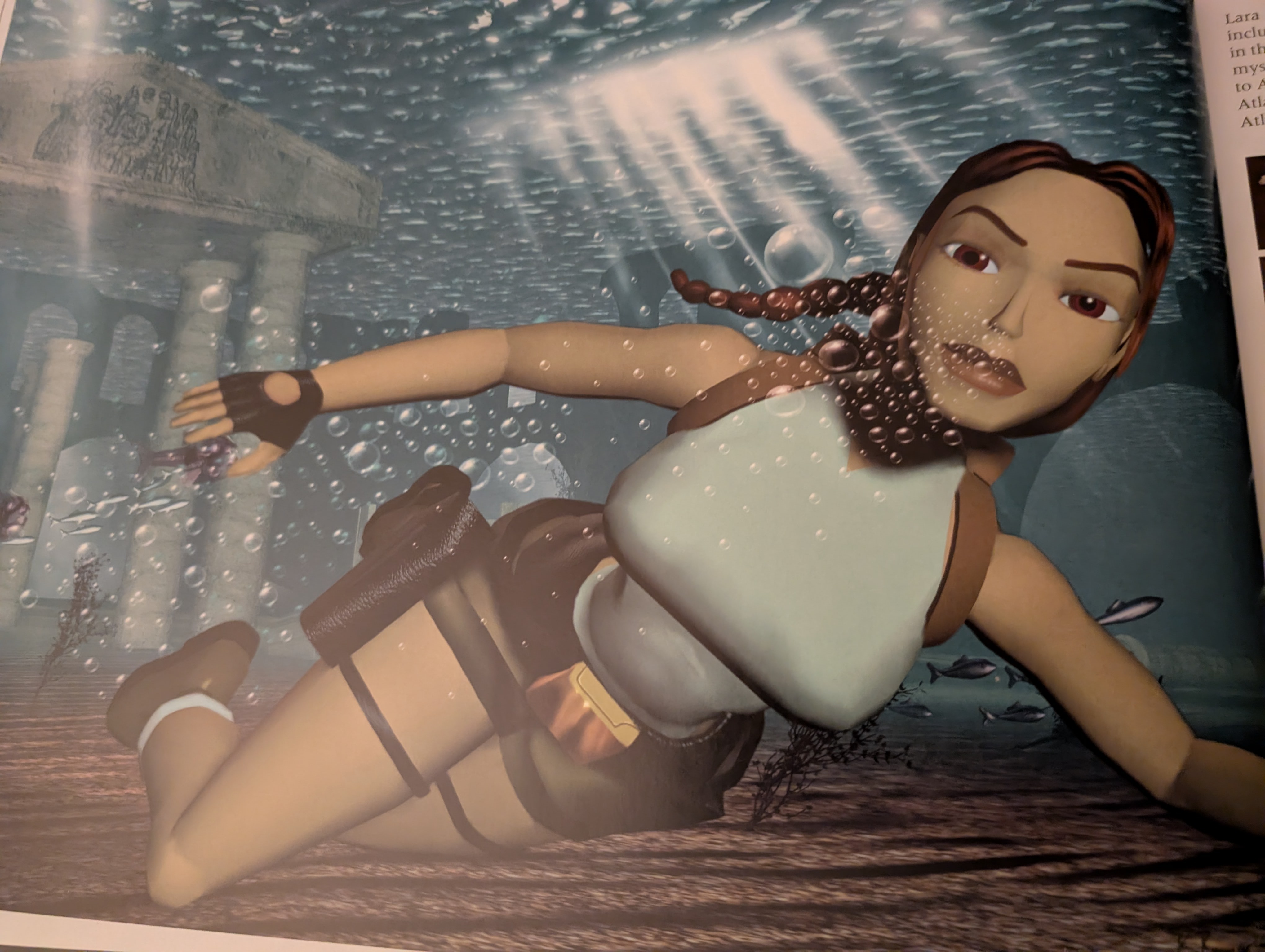
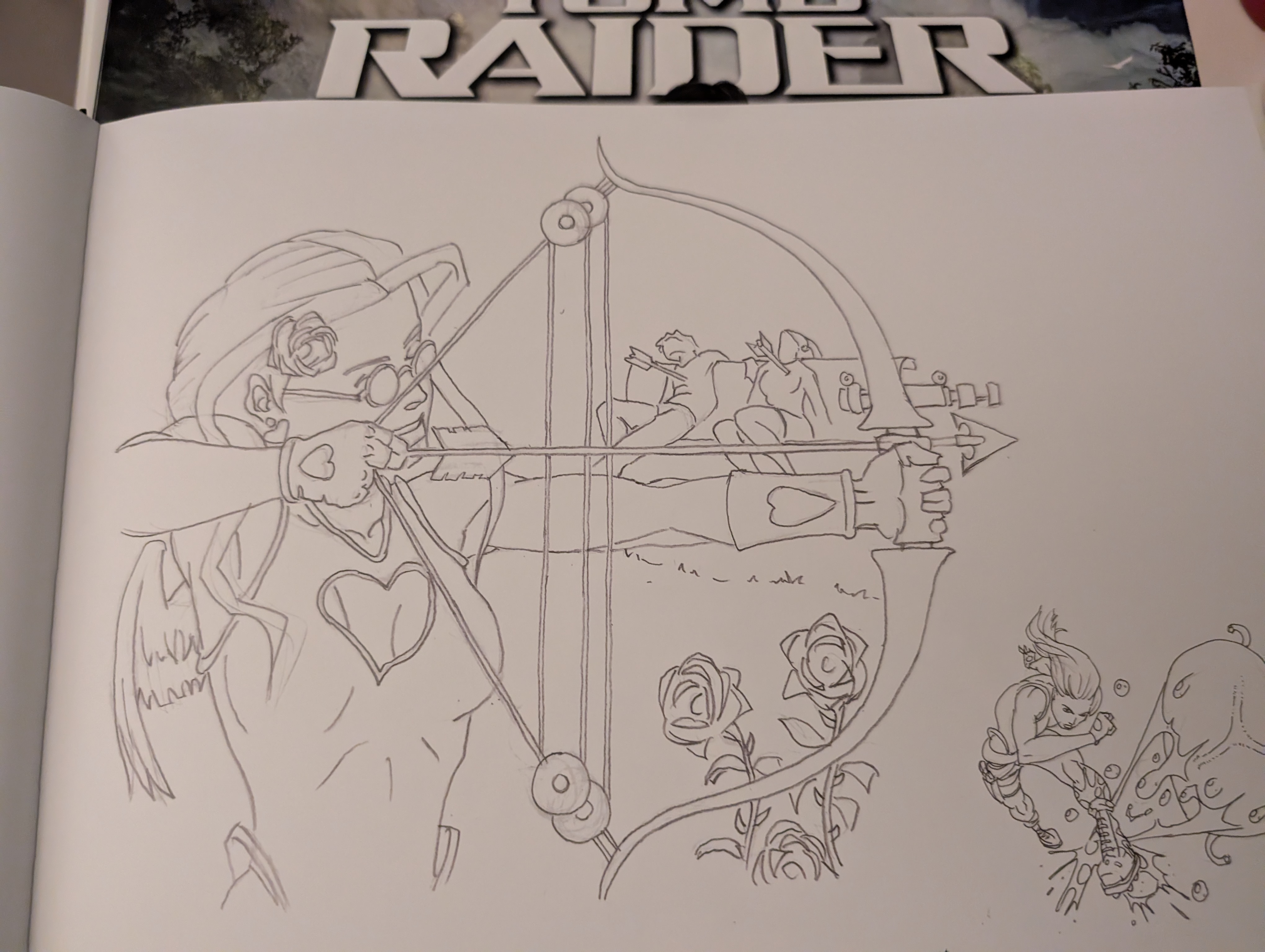
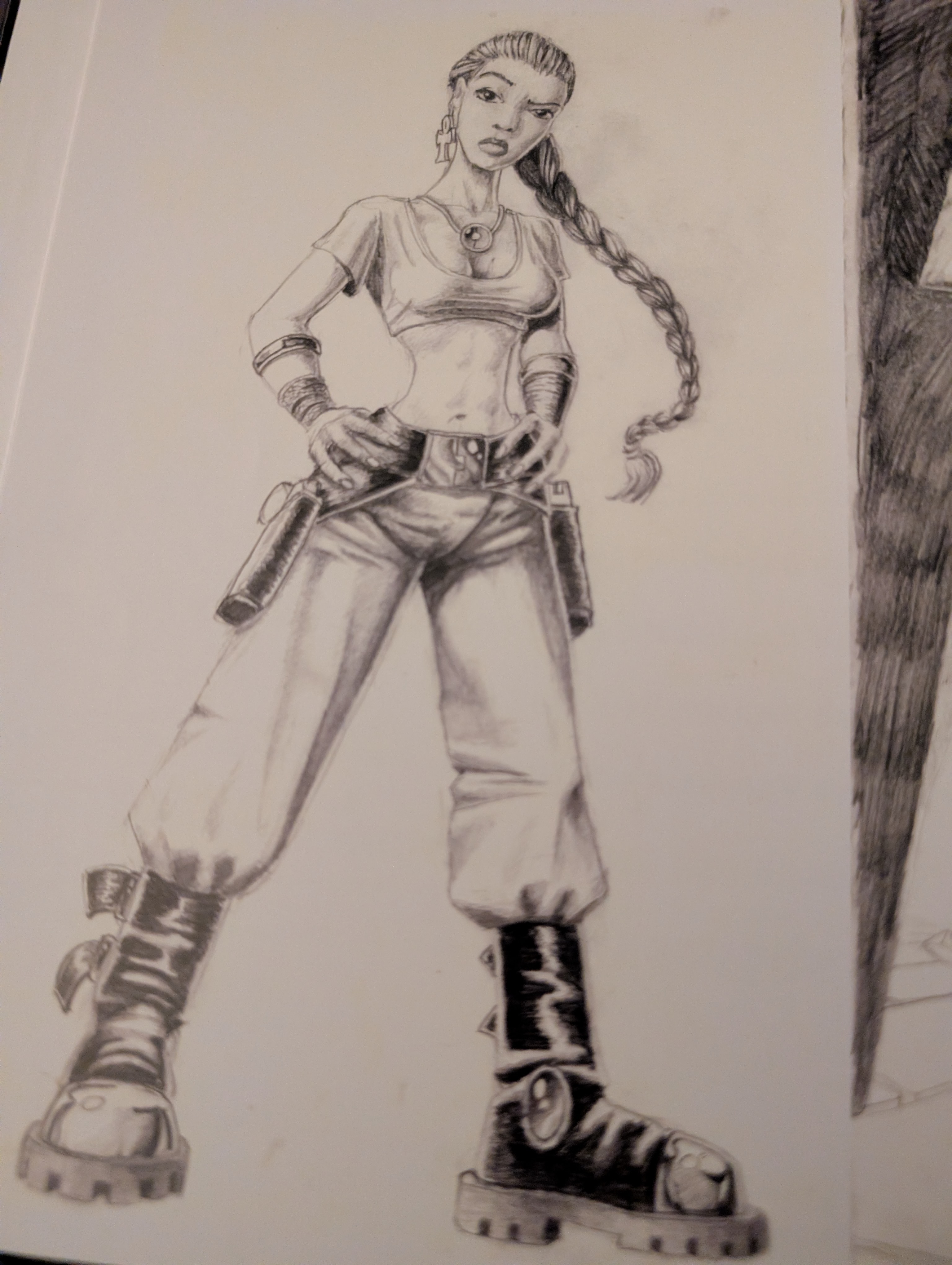
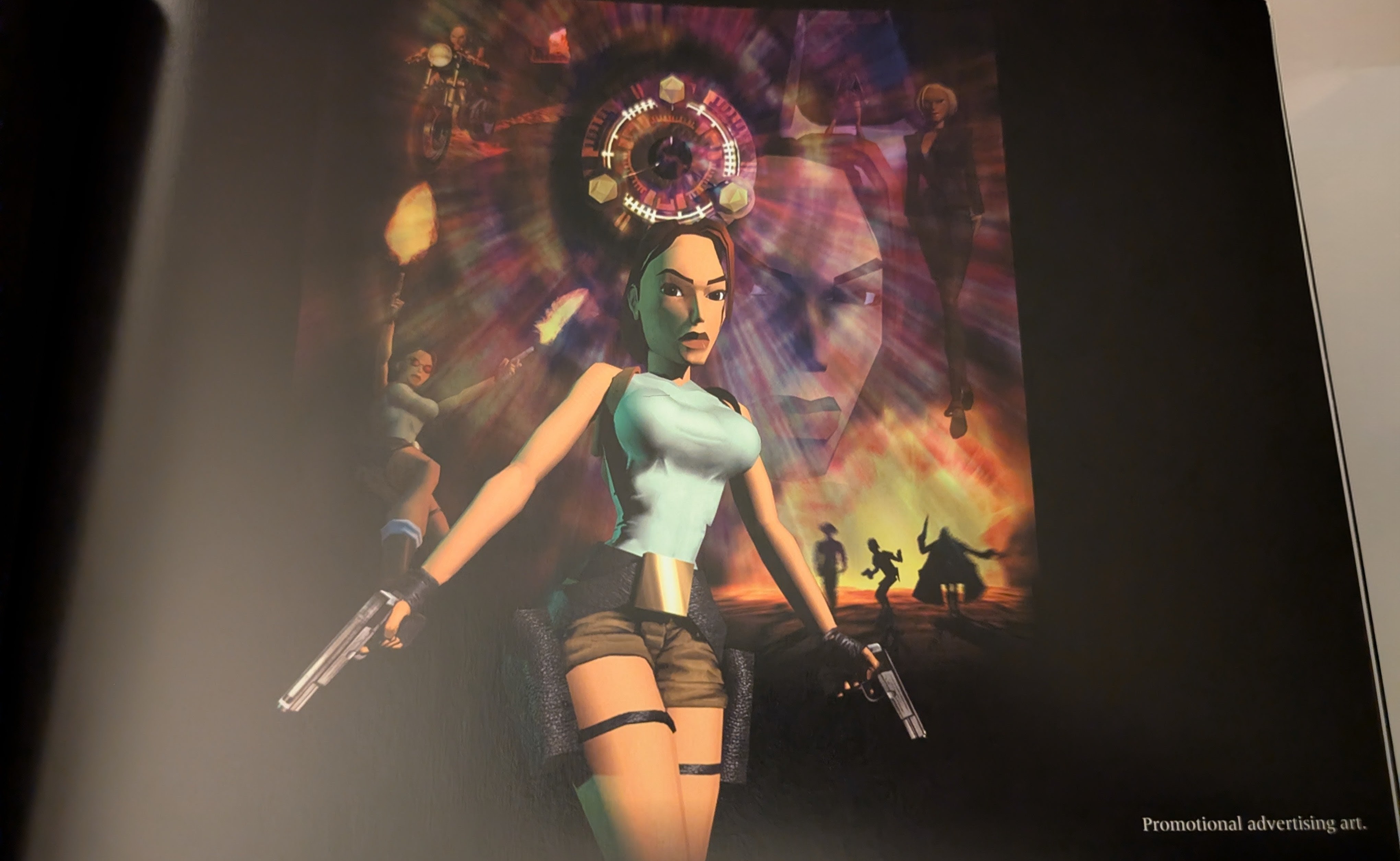
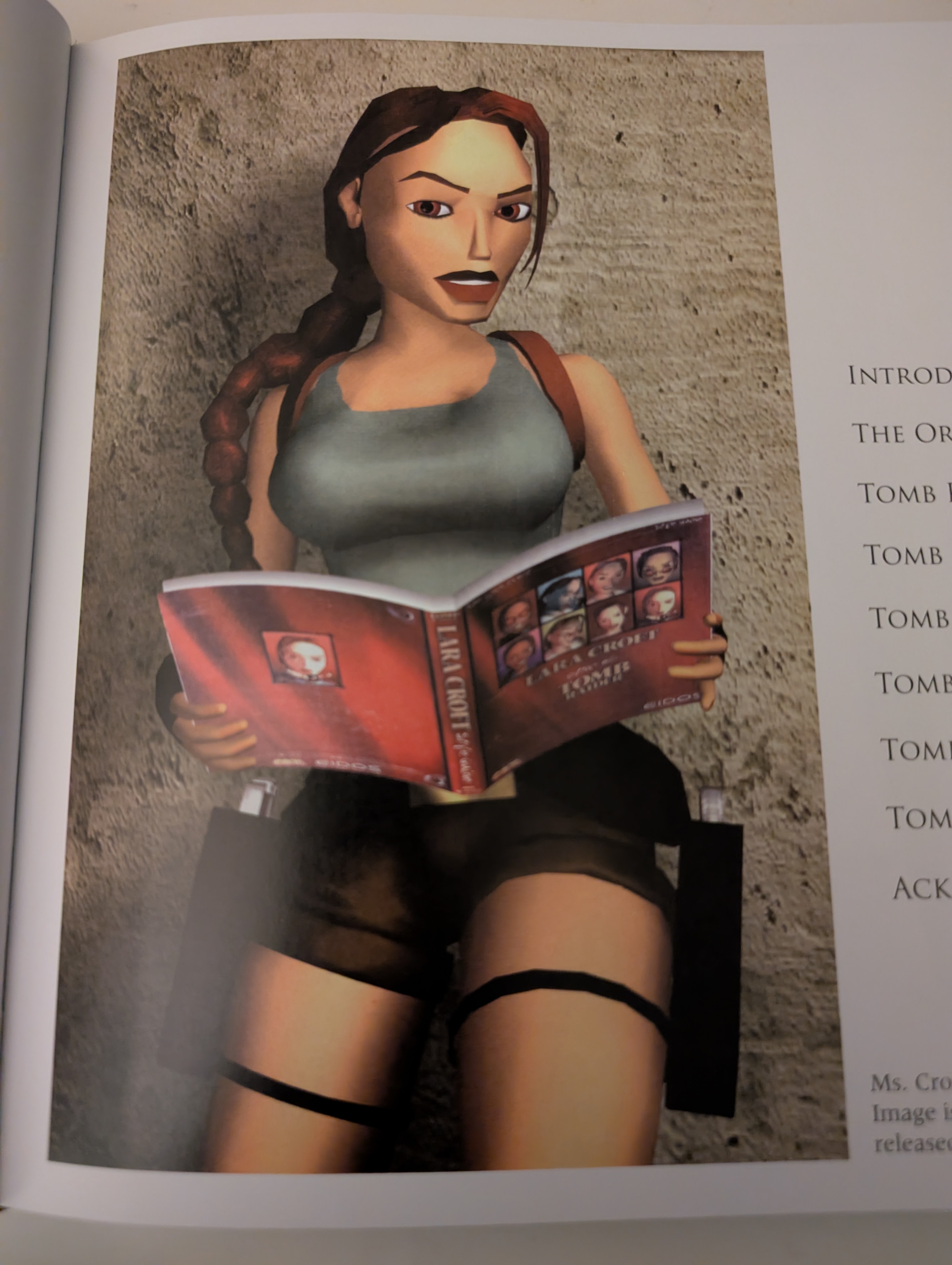
Lara Croft was almost male: Toby Gard, the lead artist, initially designed the protagonist as a man. He later switched to a female character to stand out from the many male heroes of the time.
Laura Cruz to Lara Croft When Toby Gard first designed the character at Core Design in 1995, he envisioned her as a South American adventurer named Laura Cruz. However, the studio decided to change her background to make her more appealing to the UK market, so she was reimagined as a British aristocrat and renamed Lara Croft. The new name was actually chosen from a list of names in the Derby phone book, where Core Design was based.
Polygon limits shaped Lara’s look: Lara’s design was constrained by the technology of the mid-90s. She was built from fewer than 500 polygons, which gave her the angular, blocky look that became iconic.
Environmental art was groundbreaking: The game’s ruins, tombs, and caves were among the first fully 3D environments in gaming. Artists had to handcraft textures pixel by pixel to create believable ancient settings.
Released first on Sega Saturn: The art assets had to be optimised for multiple platforms, starting with the Saturn, which made the design process even more challenging
Tomb Raider 2


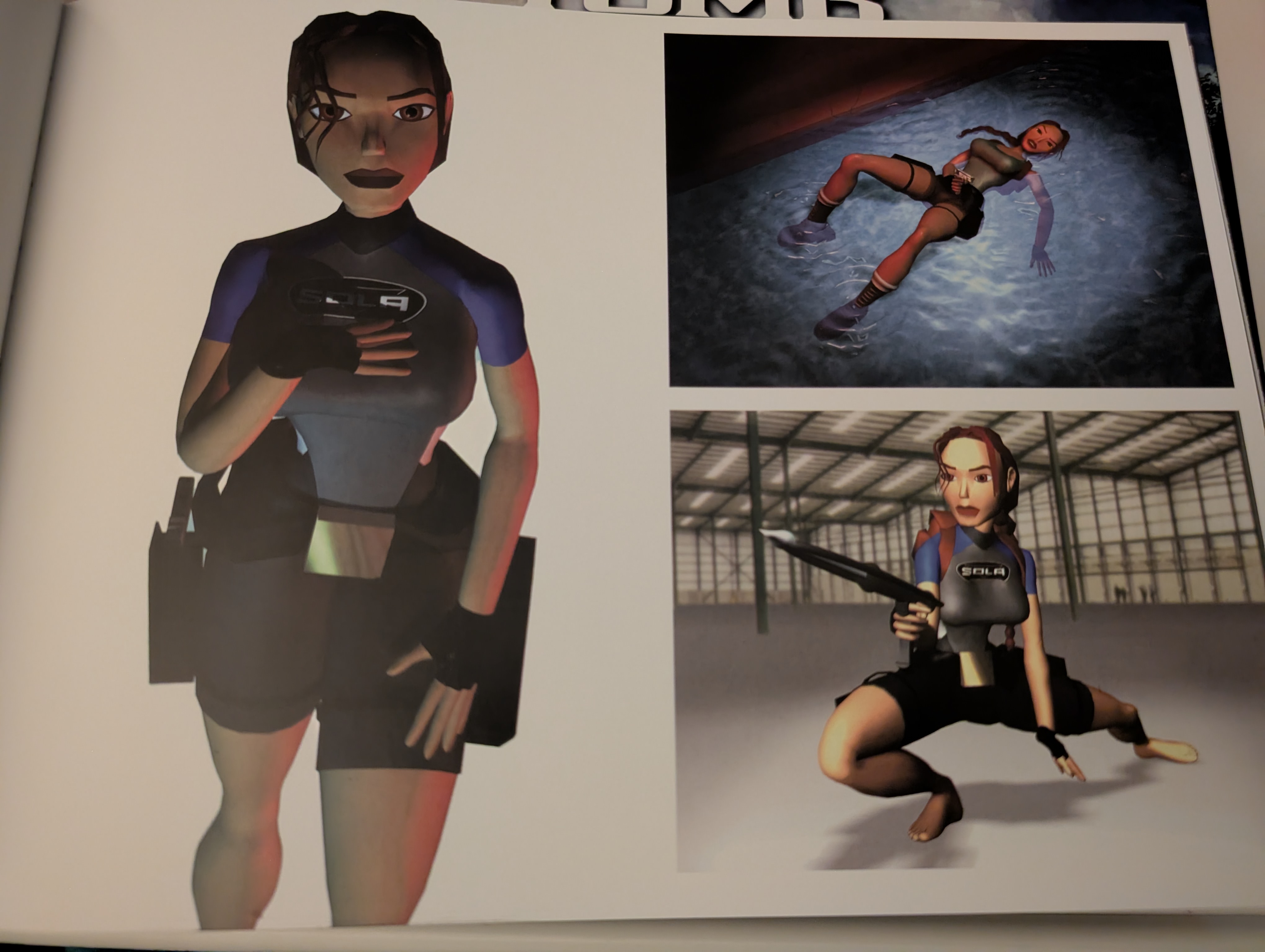
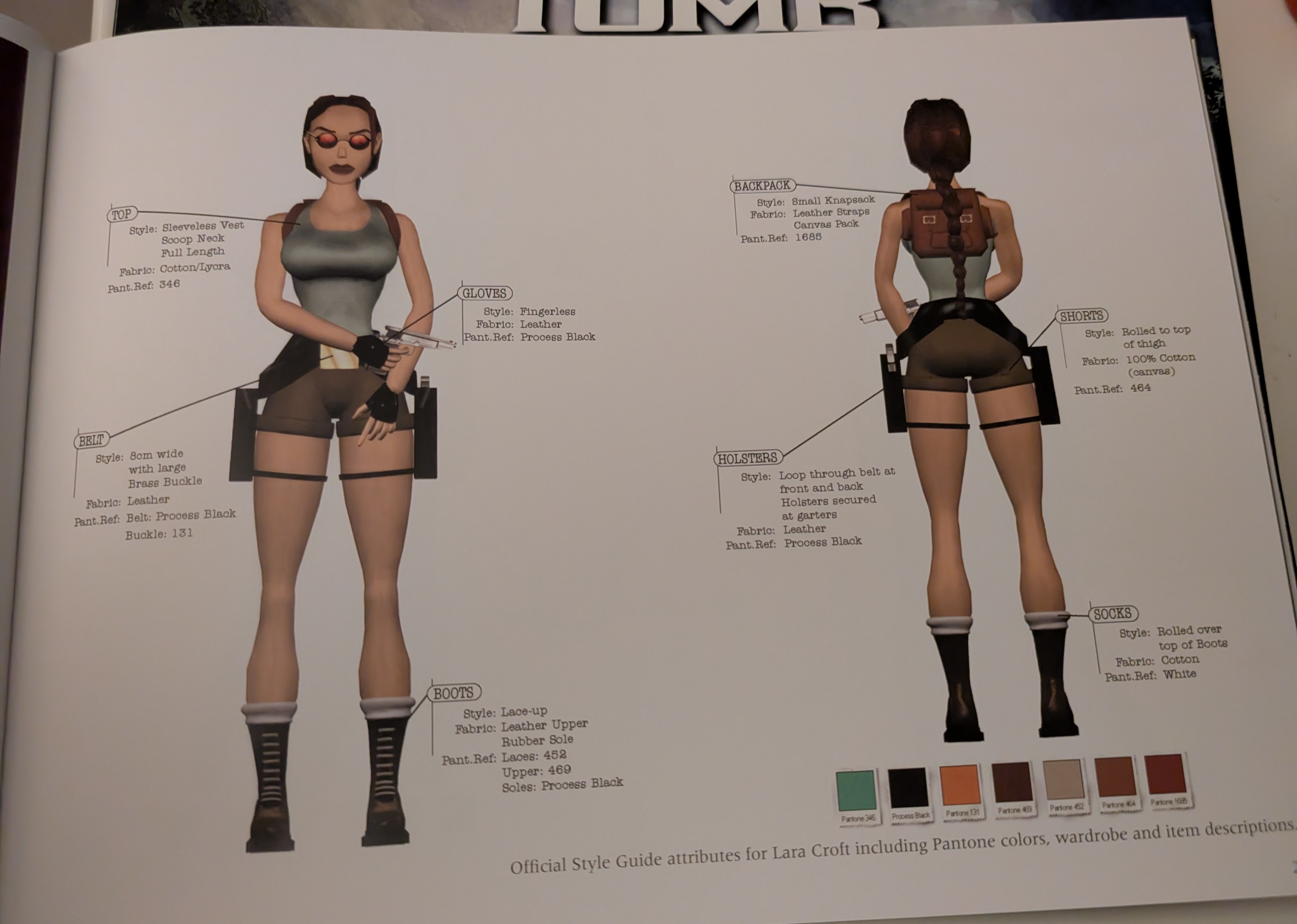
More detailed environments: Compared to the first game, Tomb Raider II featured more complex textures and larger, more varied settings such as the Great Wall of China to Venetian canals. Lara also got her long plait that was missing from the first game due to technical limitations of the early 3D engines.
Venice level artistry: The Venice stages were particularly praised for their atmospheric design, combining water reflections, gondolas, and Renaissance-inspired architecture to create one of the most memorable visual experiences of the era.
Concept art evolution: Core Design’s artists produced extensive concept sketches for outfits, weapons, and locations. This included Lara’s famous wetsuit for the underwater levels, which became one of her most recognisable alternate looks.
Tomb Raider 3
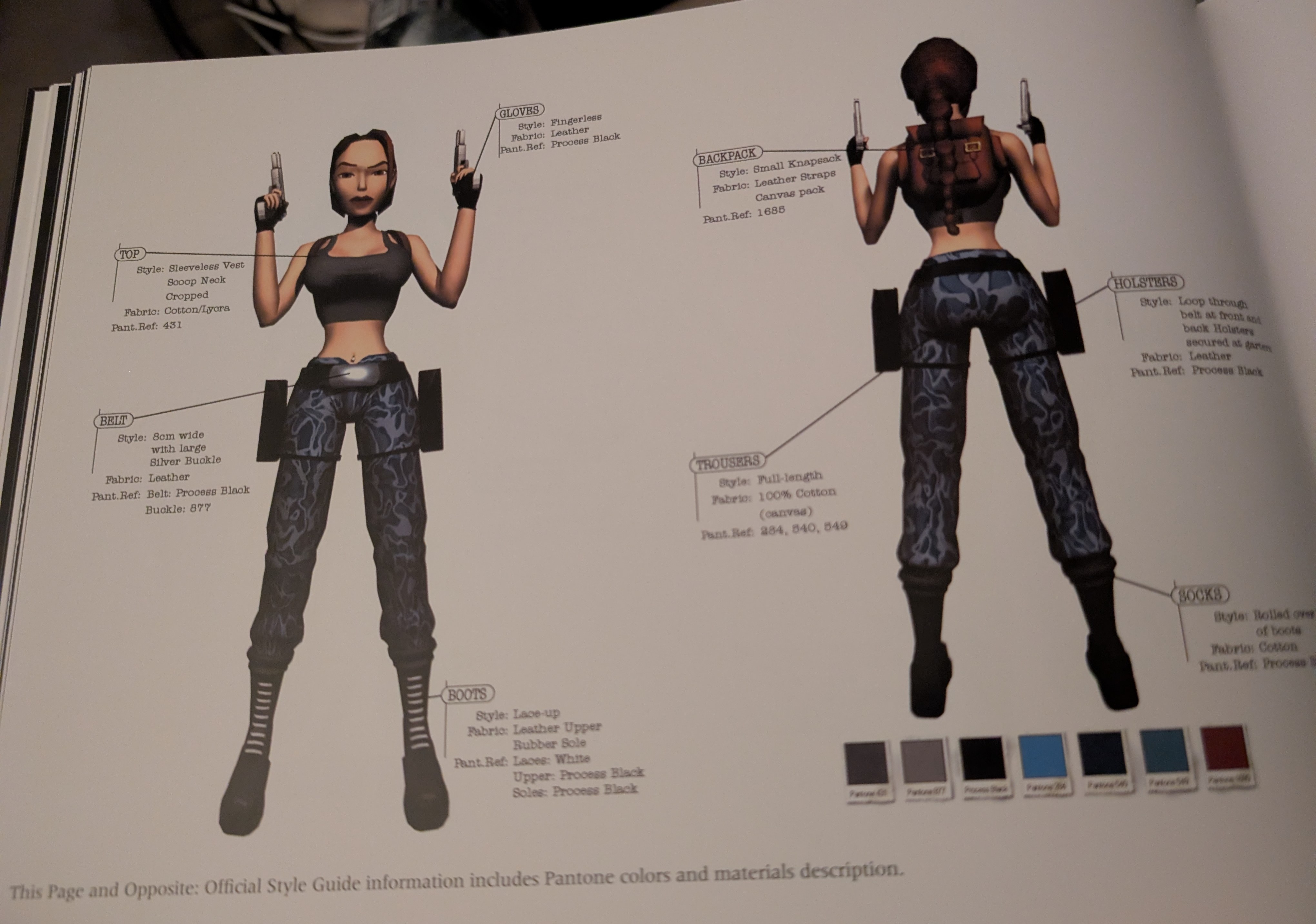
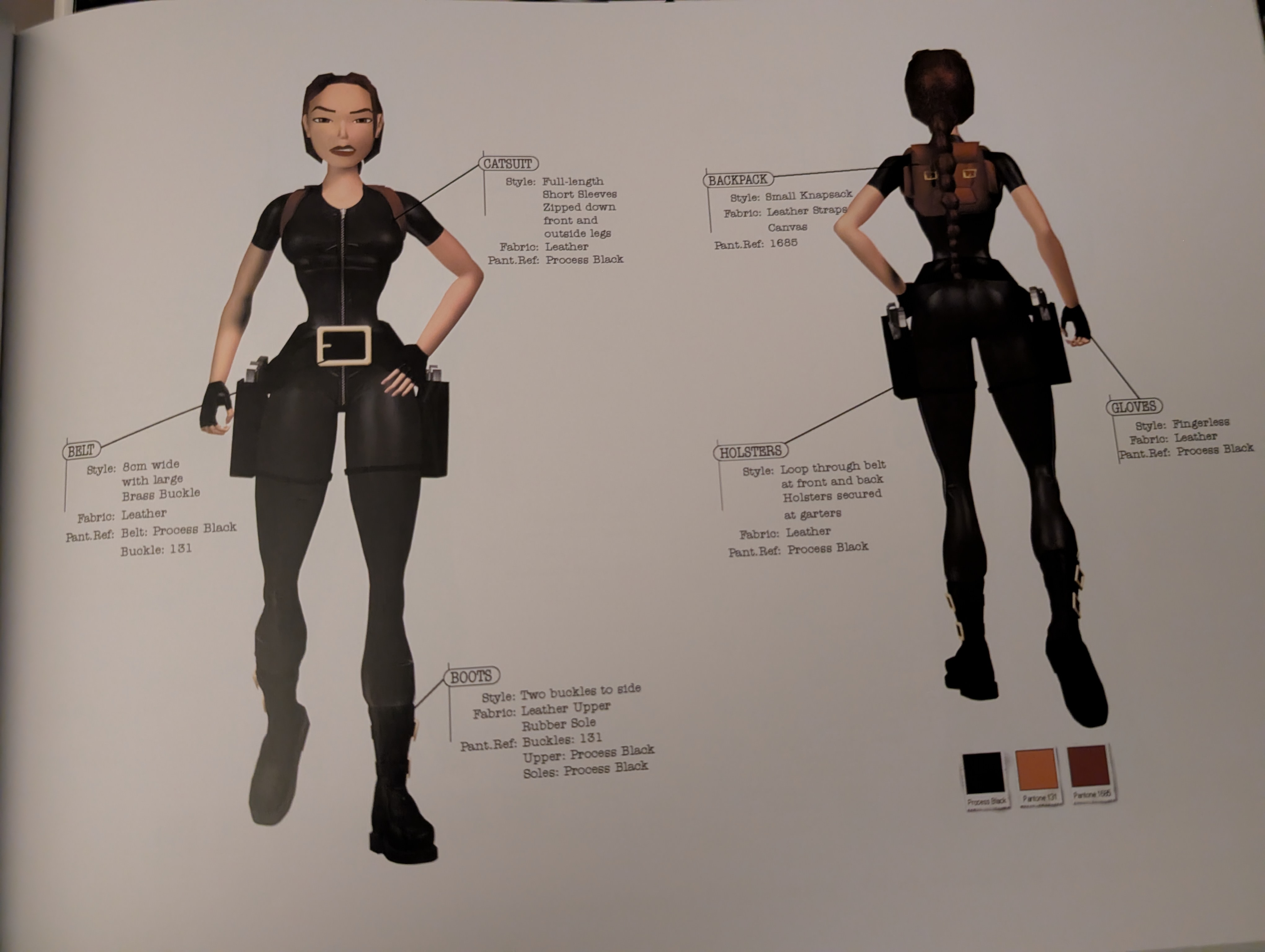
New outfits for Lara: This was the first game to give Lara multiple costumes tied to environments. She wore a bomber jacket in Antarctica, camouflage gear in Nevada, and her classic teal top in warmer climates. Her London catsuit is by far my favourite.
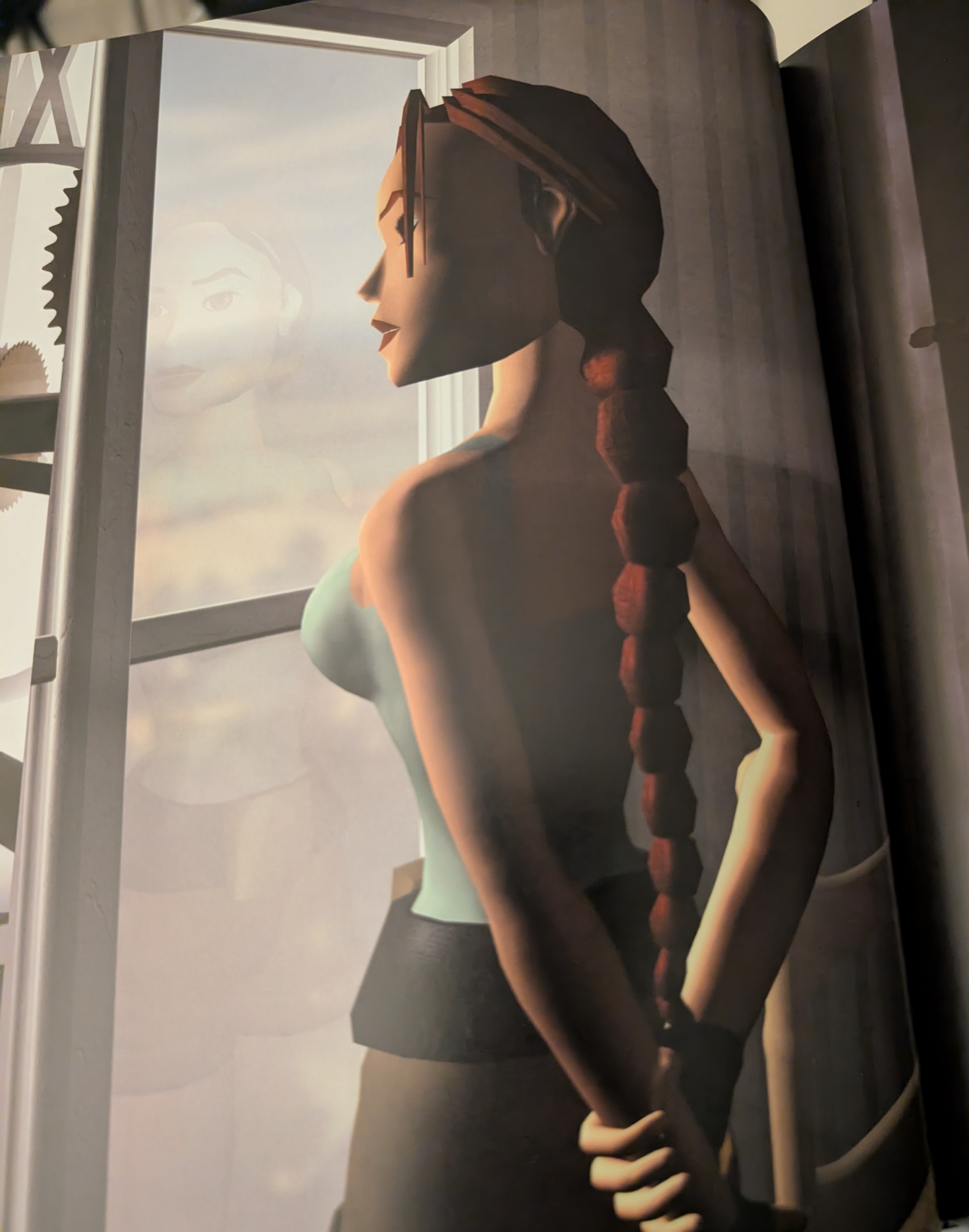
Improved lighting and textures: Core Design upgraded the engine to allow more complex lighting effects and richer textures. This gave environments like the jungle in India or the icy caves of Antarctica a more atmospheric feel compared to earlier games. I also love the promotional artwork for Tomb Raider 3, especially the image of Lara near the window – you can see her reflection.
Concept art expansion: The art team produced more detailed sketches and designs than in previous titles, especially for exotic enemies and vehicles (like the quad bike and kayak). These concept pieces guided the new gameplay mechanics visually.
Cultural references: Levels like India’s temples and London’s rooftops drew heavily from real-world architecture and mythology, blending fantasy with recognisable landmarks to heighten immersion.
Tomb Raider: The Last Revelation
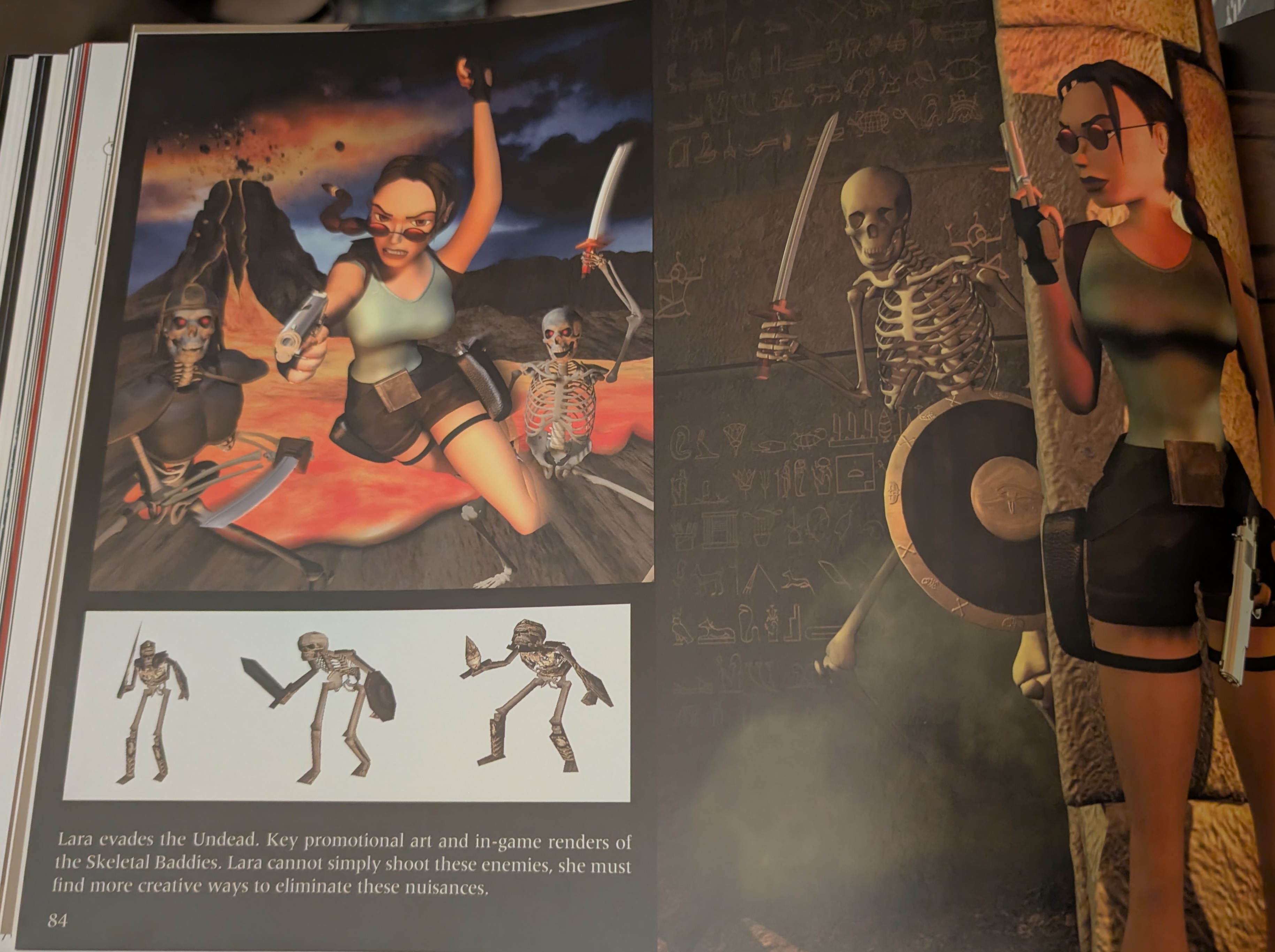


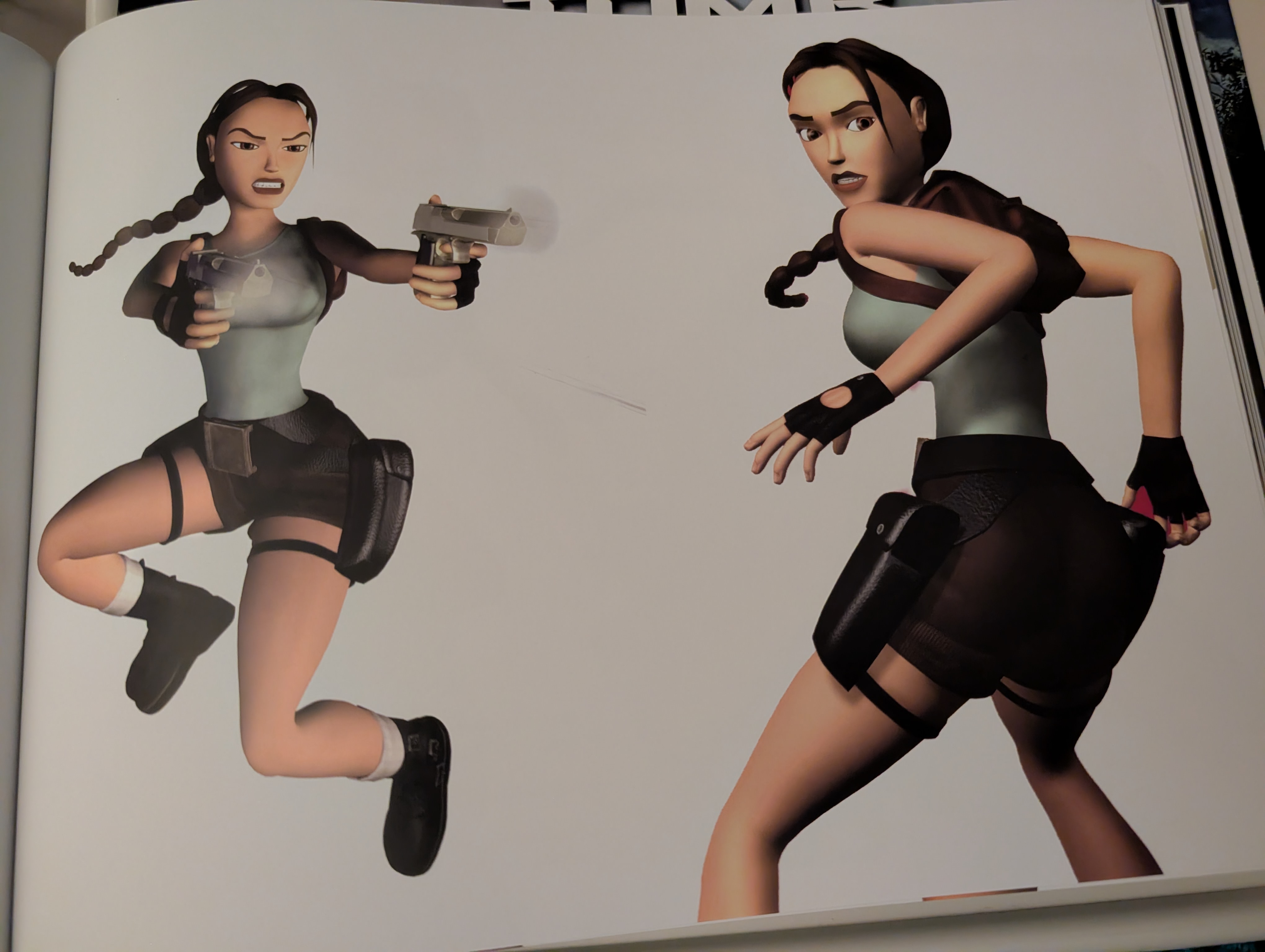
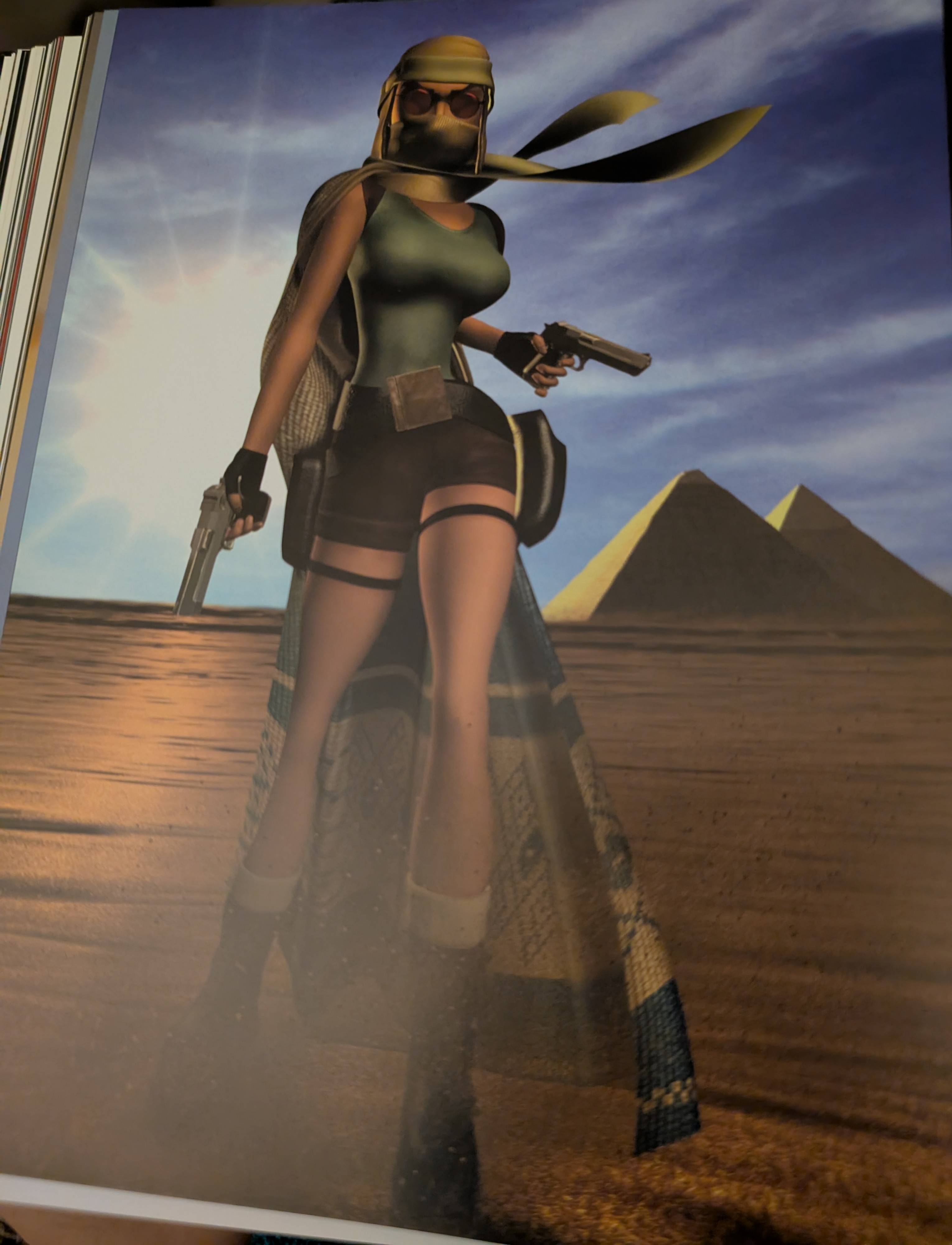
More cinematic presentation: Core Design upgraded the graphics engine to allow smoother animations, richer cutscenes, and more detailed environments. This gave the game a more cinematic feel.
Lara’s refined look: Lara Croft’s character model was updated with more polygons, smoother animations, and subtle facial expressions. This was one of the first times players saw her rendered with greater realism, moving away from the blockier look.
Environmental storytelling: The art team leaned heavily on hieroglyphics, murals, and architectural details to immerse players in Egyptian mythology which were utilised for puzzles or hidden secrets, which were slightly frustrating to play through, ngl!
Tomb Raider: Chronicles


Anthology-style design: Unlike previous games, Chronicles was structured as a series of flashbacks told after Lara’s apparent death in The Last Revelation. This gave the art team freedom to explore diverse settings from Rome’s Colosseum to a German submarine base, an Irish ghost story, and futuristic New York skyscrapers.
Variety of outfits: Lara’s wardrobe expanded significantly, with costumes tailored to each storyline. She wore a sleek catsuit in New York, a diving suit for the submarine levels.
Concept art richness: The anthology format required extensive concept sketches to capture the different moods and cultural references of each setting. Artists had to balance realism with fantasy across four distinct story arcs.
Engine limitations: By 2000, the PlayStation hardware was showing its age, so artists had to push the existing engine to its limits while competing against newer, flashier titles.
Tomb Raider: The Angel of Darkness
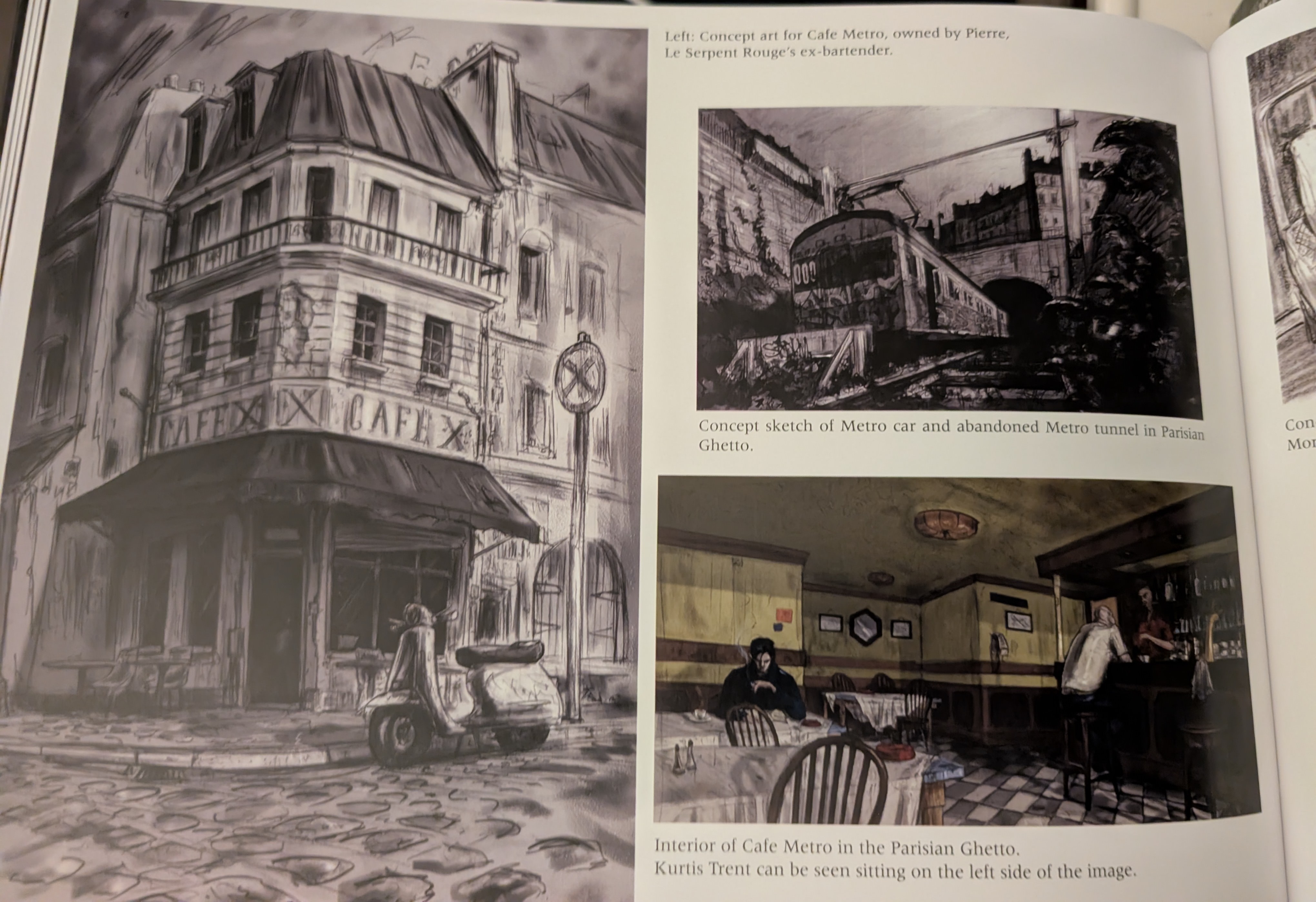

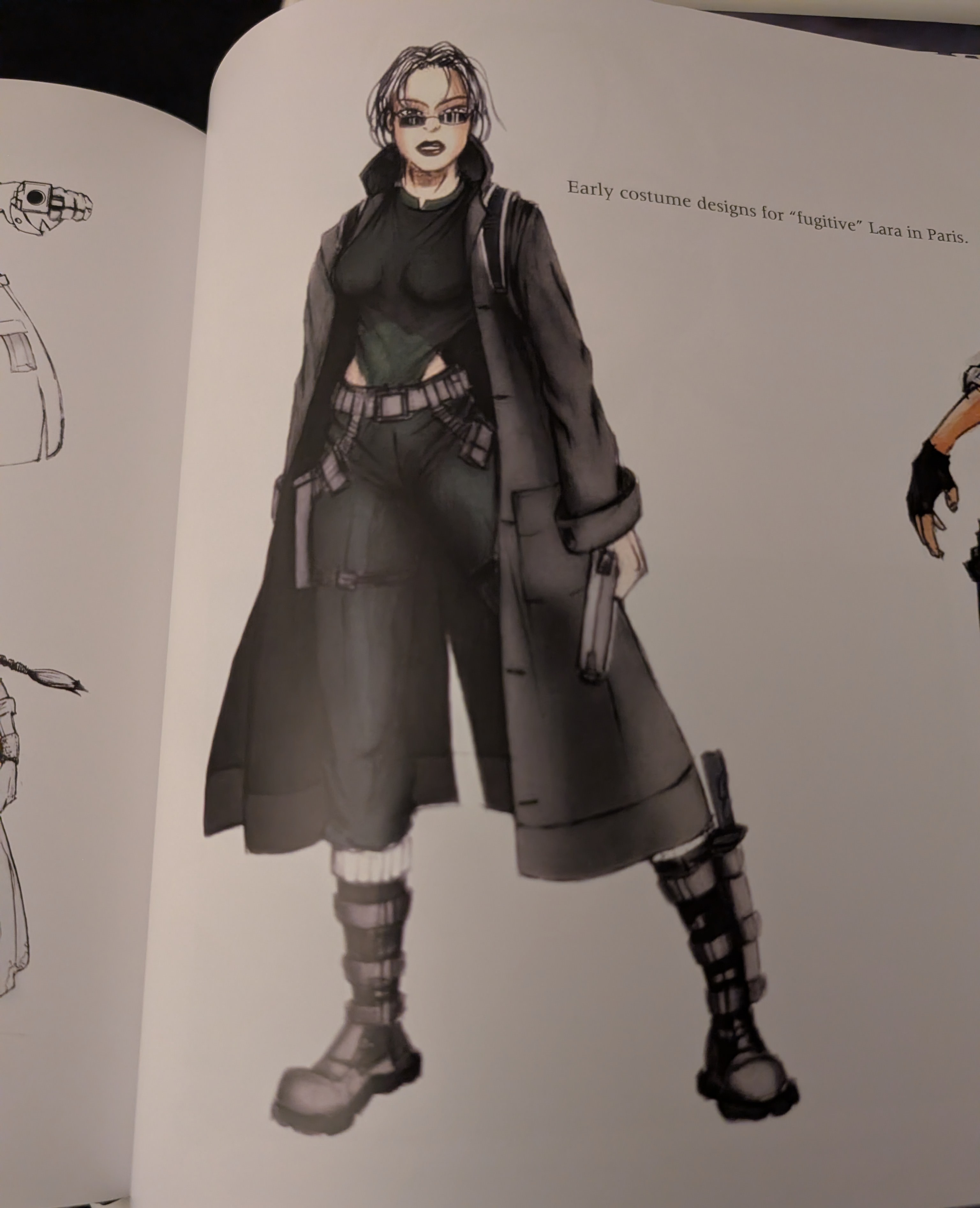
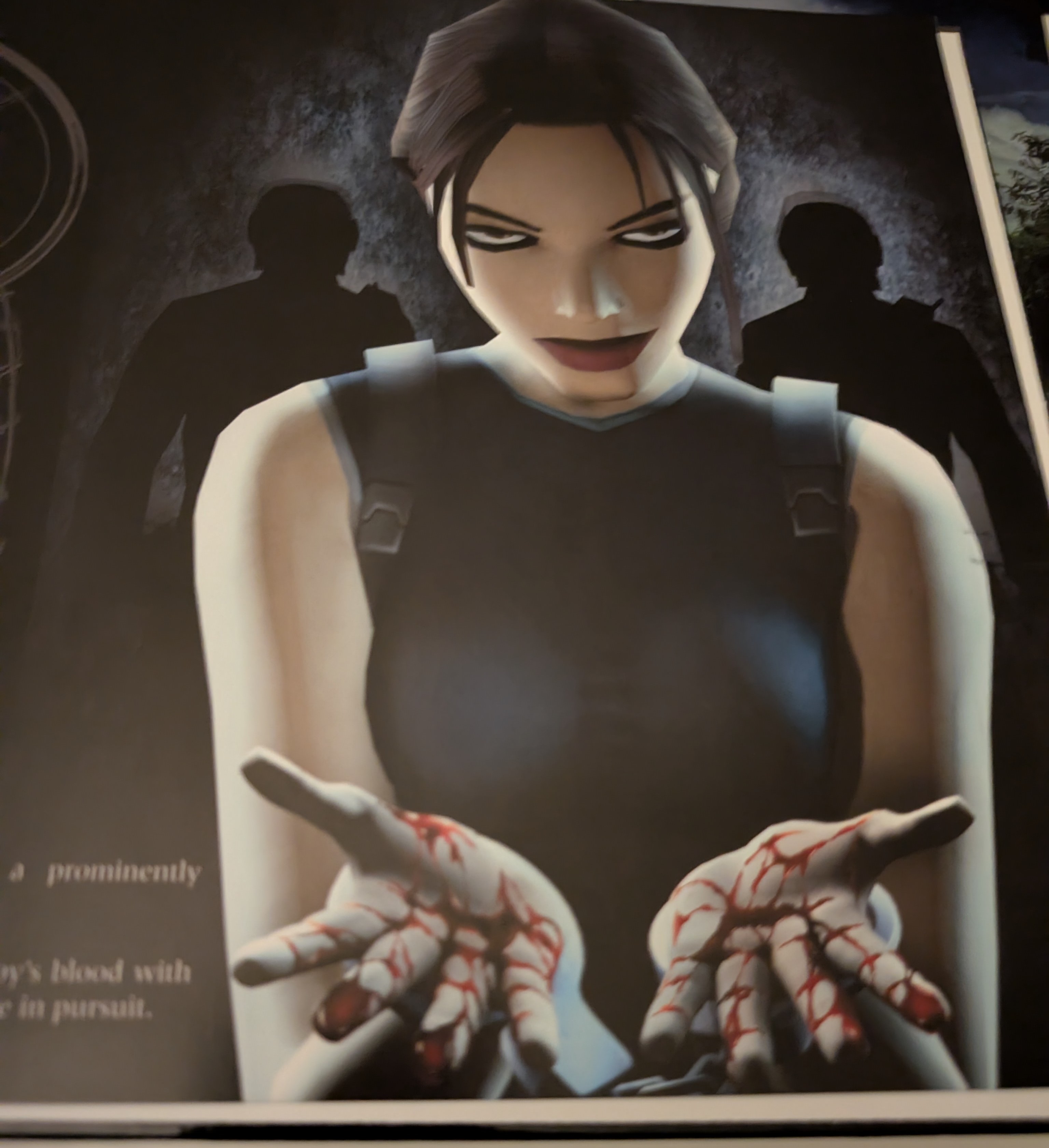
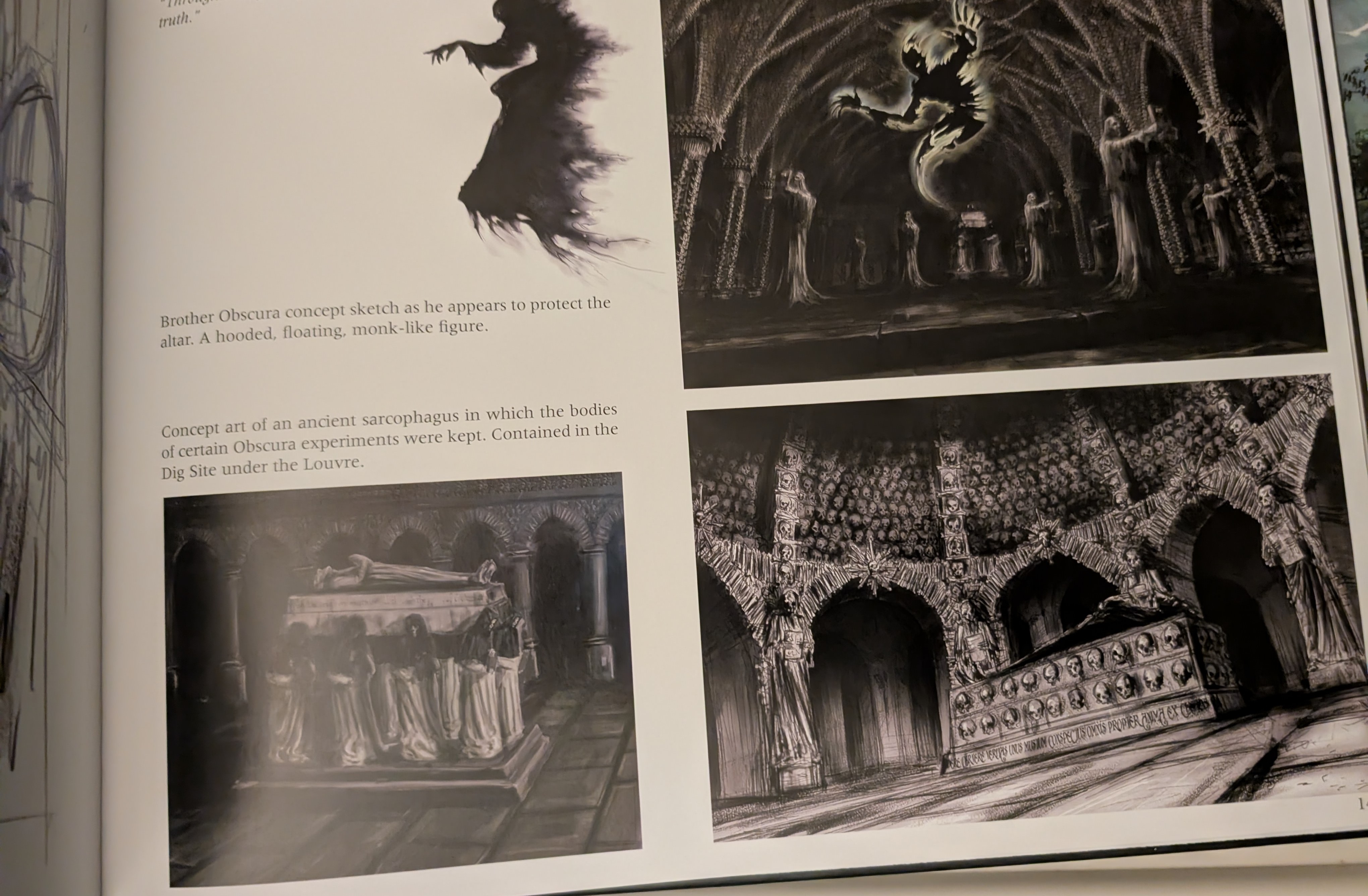
Darker tone, darker art: Core Design deliberately shifted Lara’s world into a more gothic, noir-inspired aesthetic. Parisian backstreets, shadowy catacombs, and eerie museums.
Lara’s redesign: Lara’s model was rebuilt with far more polygons than in the PlayStation 1 era, giving her sharper facial features, updated proportions, and a tougher, edgier look. Her outfit was updated to a darker tank top and cargo pants.
Urban environments: Unlike the ancient ruins of earlier titles, Angel of Darkness featured modern settings like Paris apartments, nightclubs, and streets. Artists studied real Parisian architecture to capture authenticity while layering in a moody, stylised atmosphere.
Experimental engine: Core Design built a new engine to support richer textures, dynamic lighting, and larger environments. While ambitious, it was notoriously difficult to optimise, which led to performance issues.
Tomb Raider: Legend
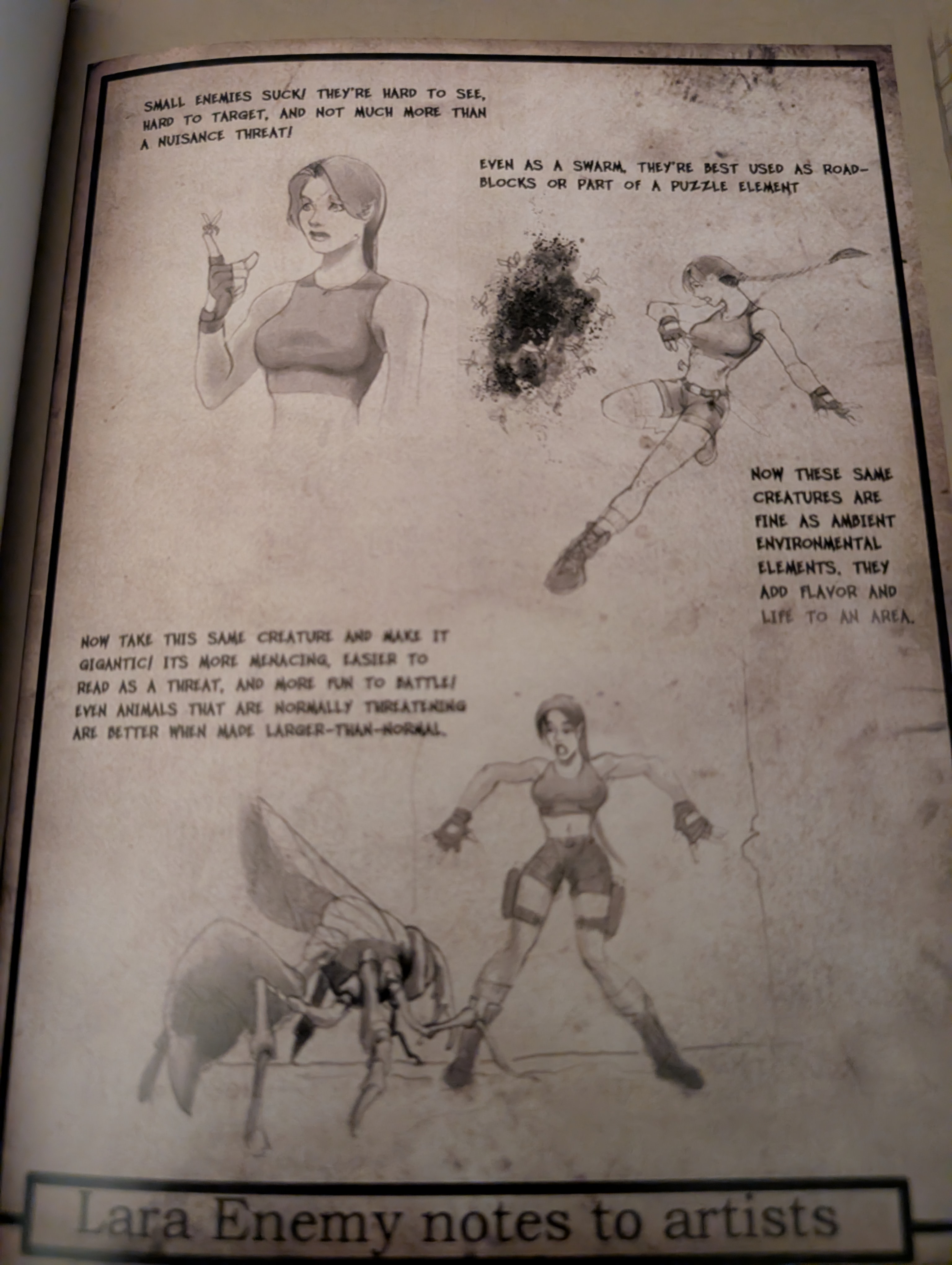
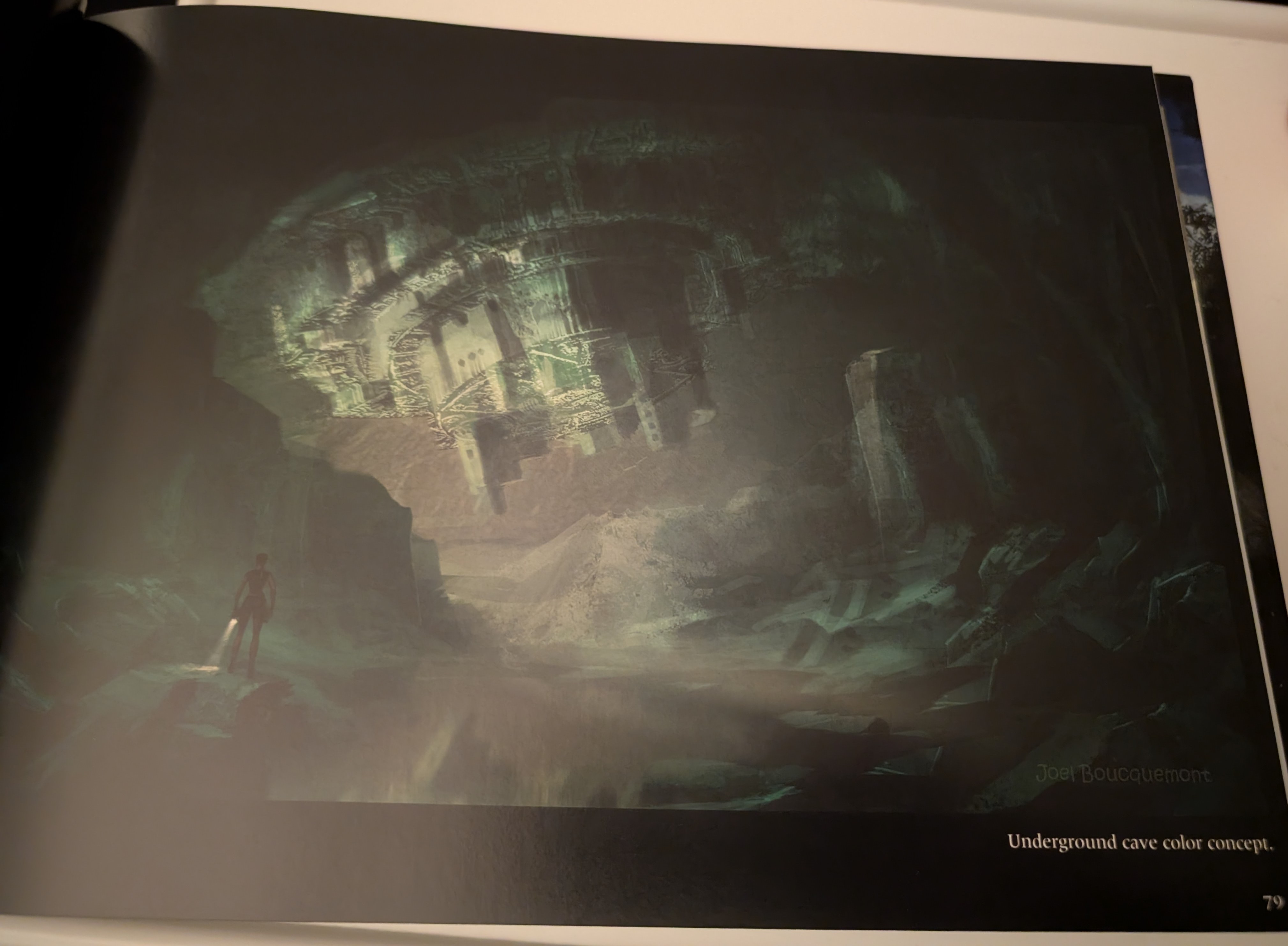


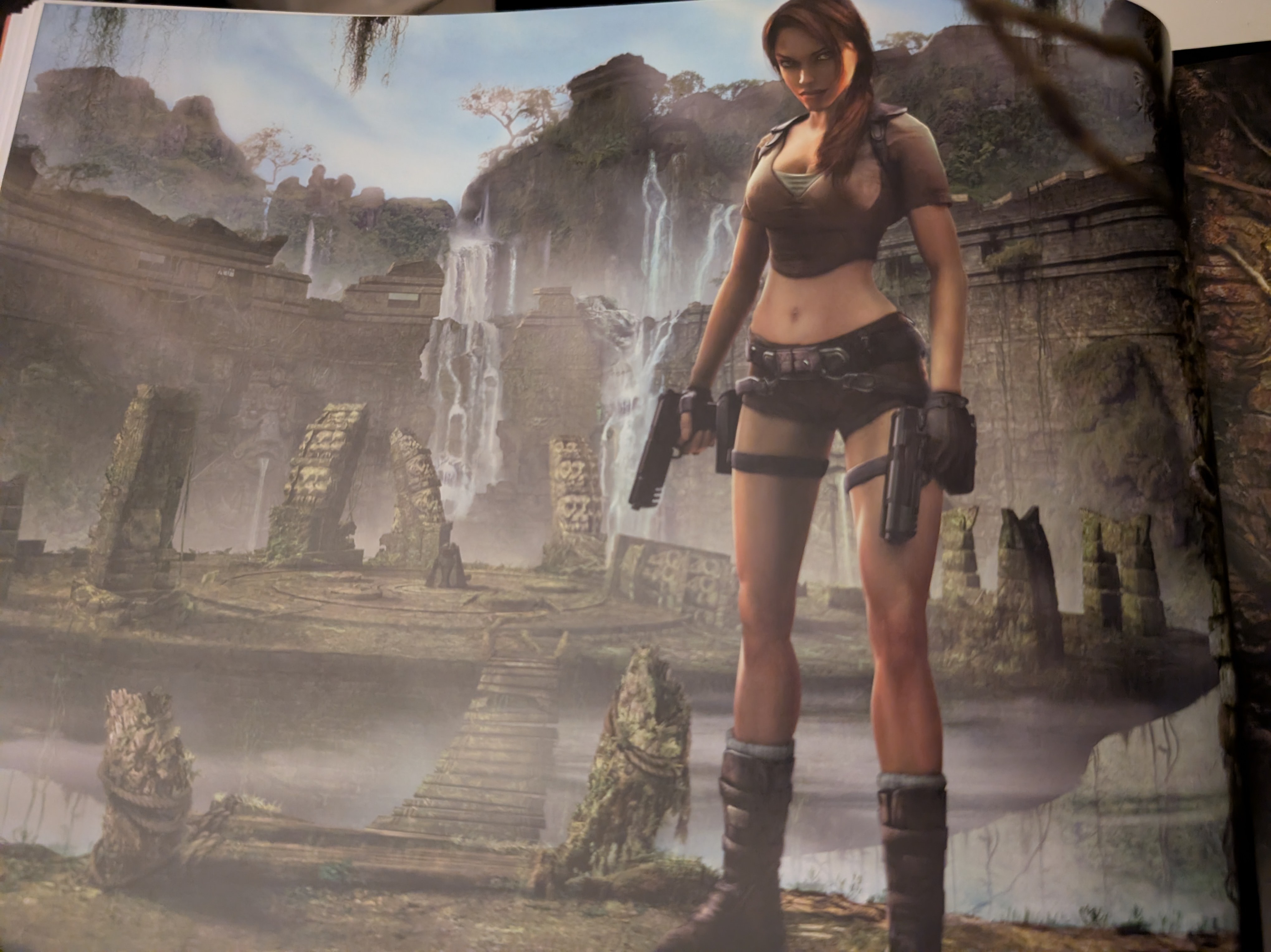
Fresh redesign of Lara: Crystal Dynamics gave Lara a complete visual overhaul. Her model was rebuilt with modern technology, featuring more realistic proportions, expressive facial animations, and smoother movement.
Motion capture for realism: For the first time in the series, Lara’s movements were created using motion capture. This gave her animations a fluid, lifelike quality and allowed the art team to focus on cinematic presentation.
Global adventure aesthetic: The game’s art spanned diverse locations, Bolivia, Ghana, Kazakhstan, Nepal, and more. Each environment was crafted with rich textures and cultural references.
Environmental detail: Advances in hardware allowed for lush jungles, snowy mountains, and high-tech facilities, all rendered with dynamic lighting and atmospheric effects. These environments were designed to feel immersive and believable.
Tomb Raider: Anniversary
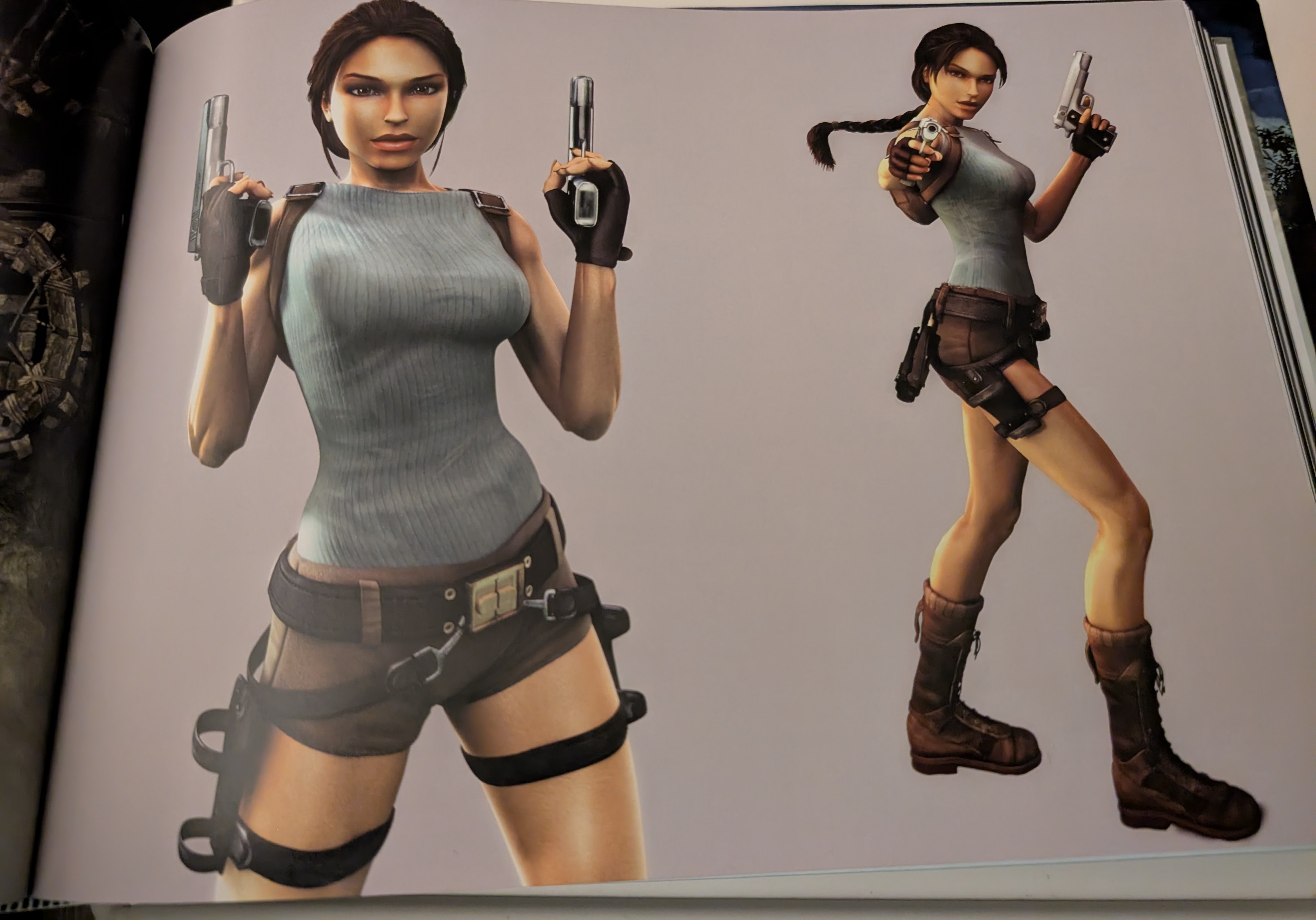
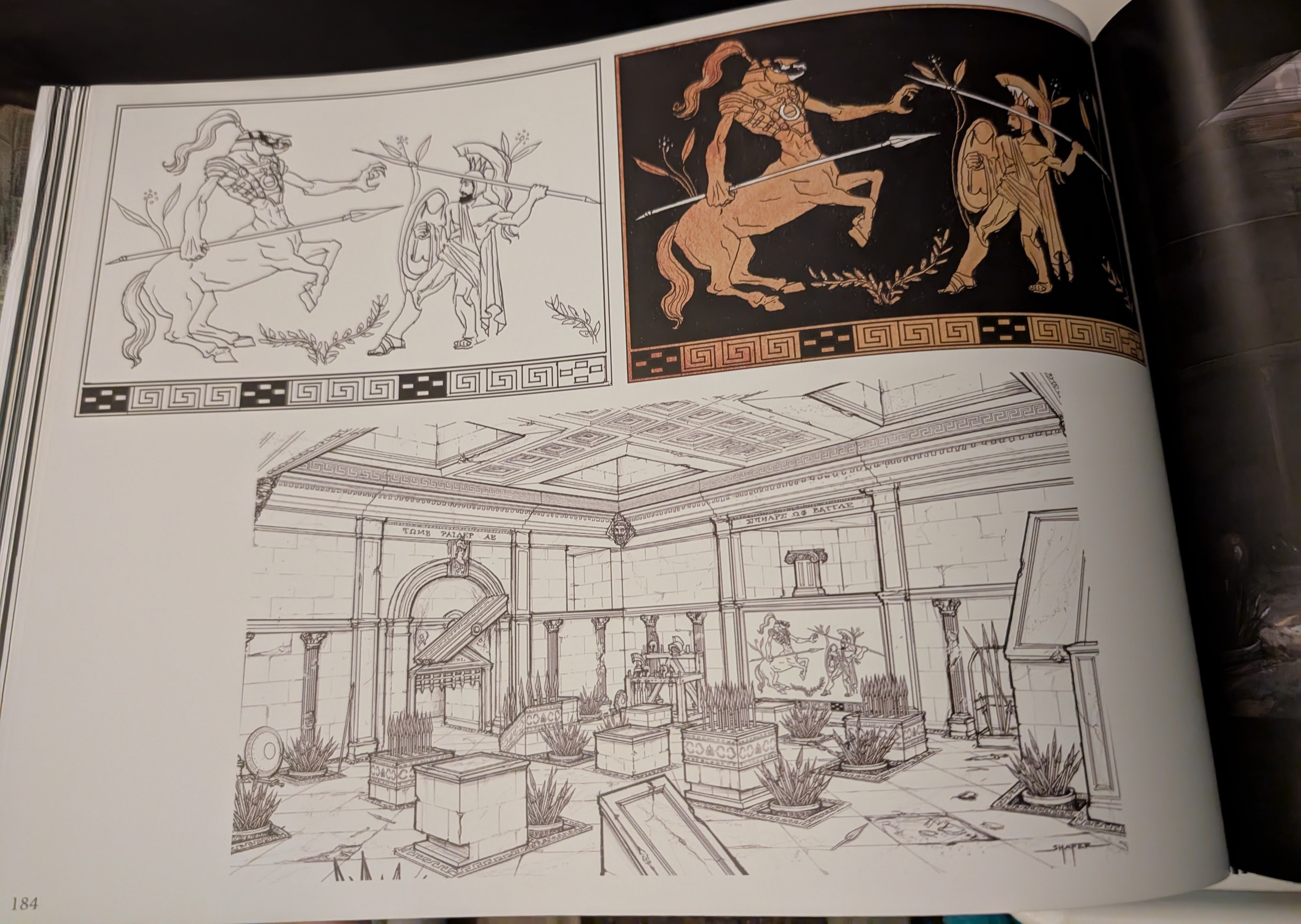

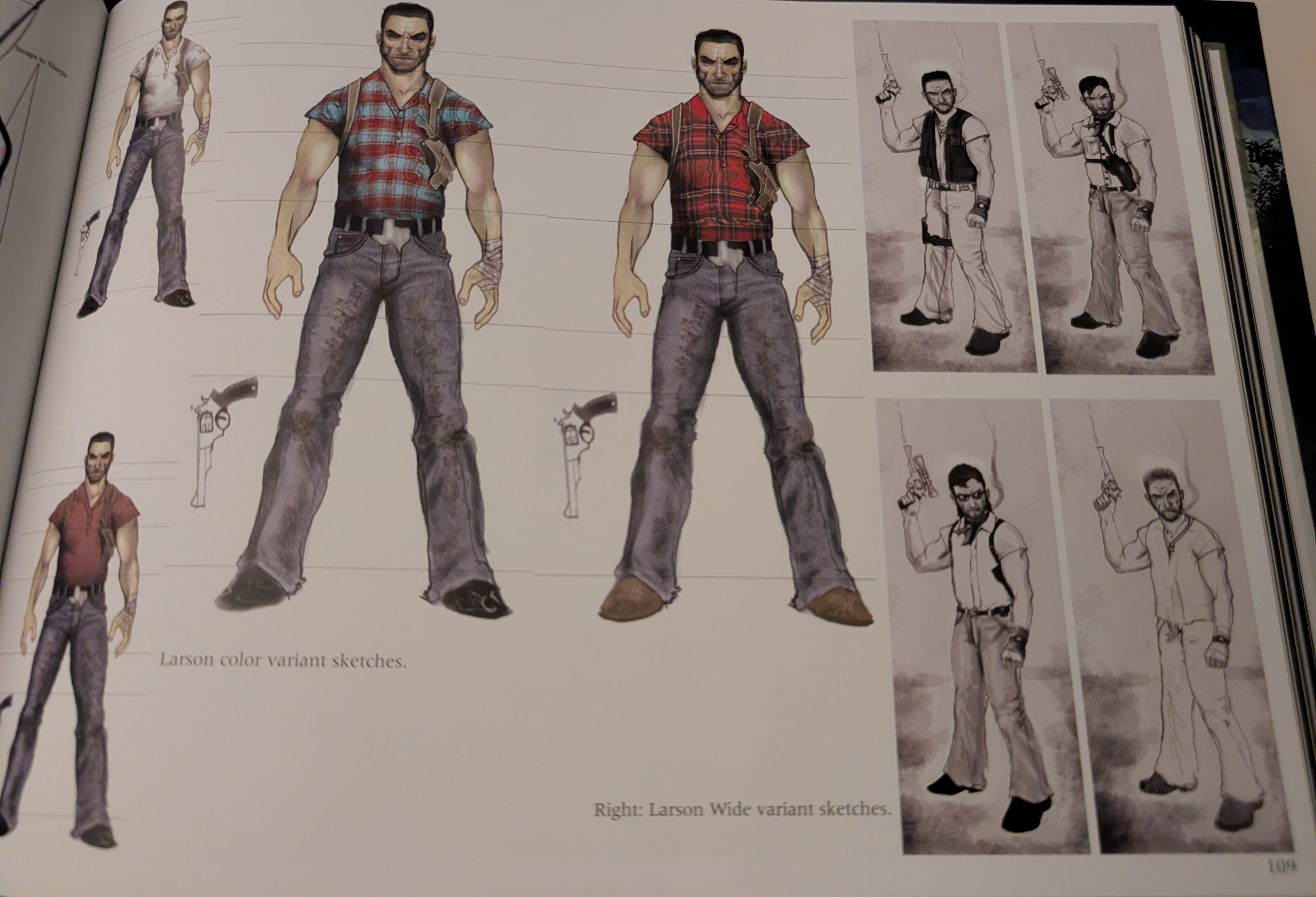
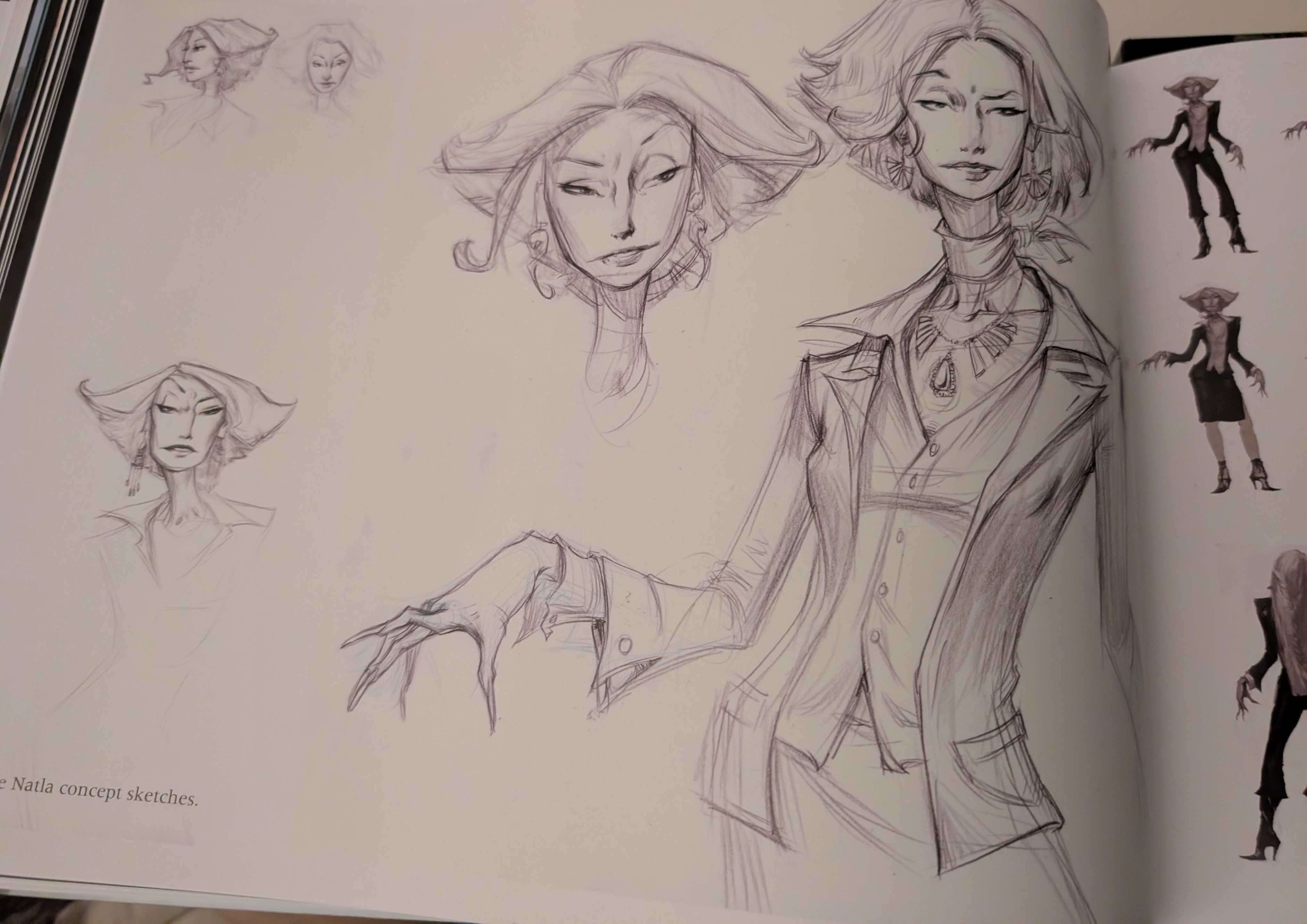
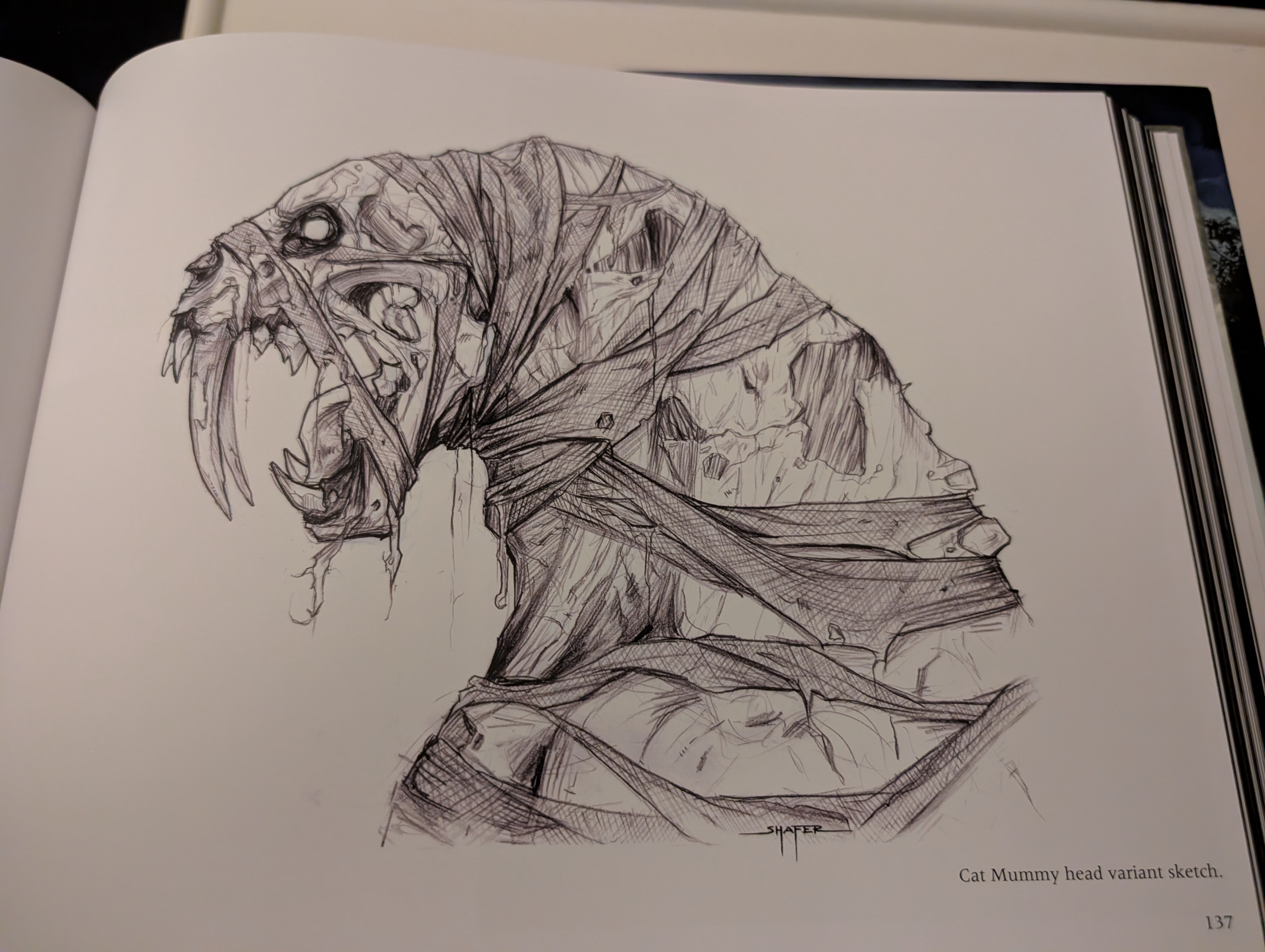

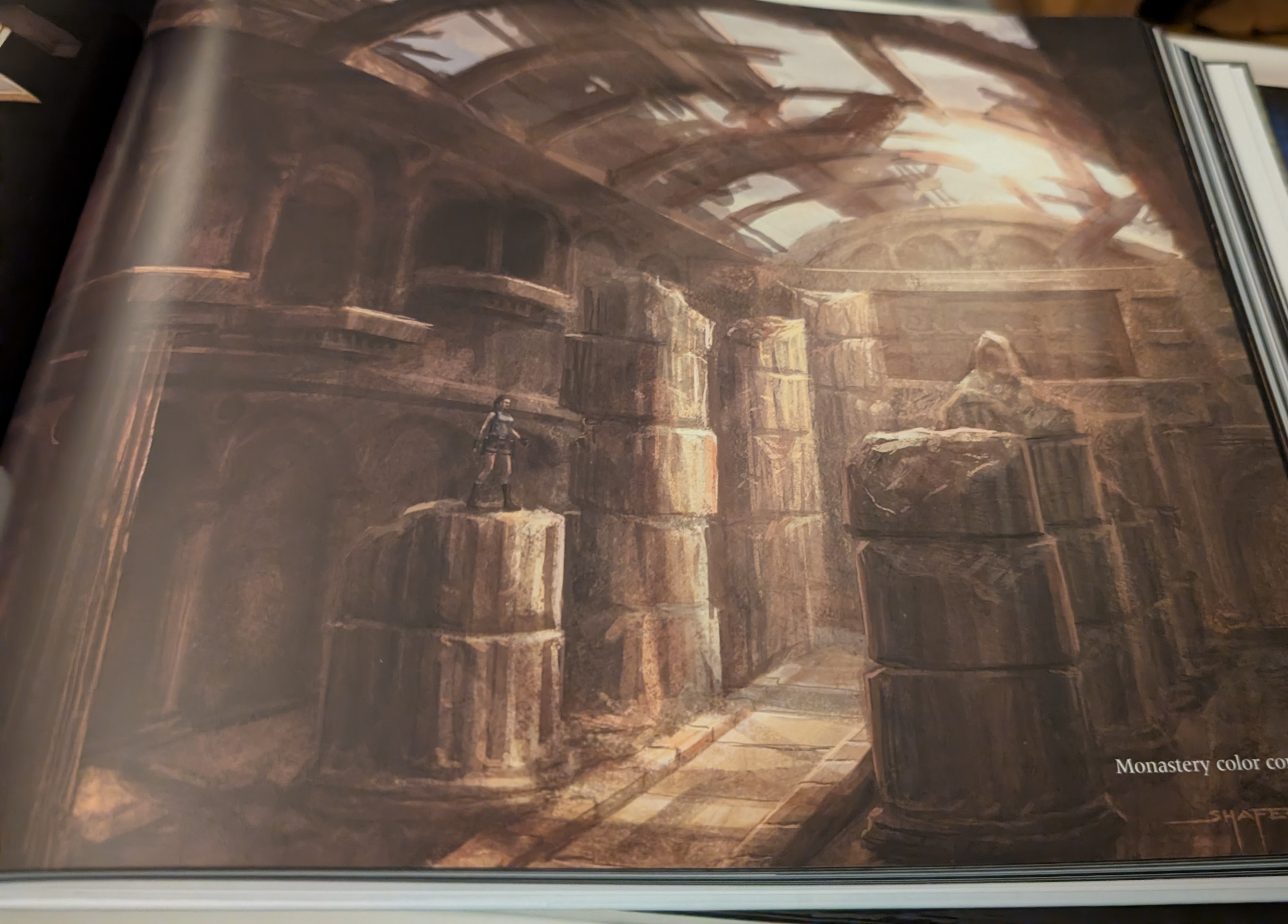
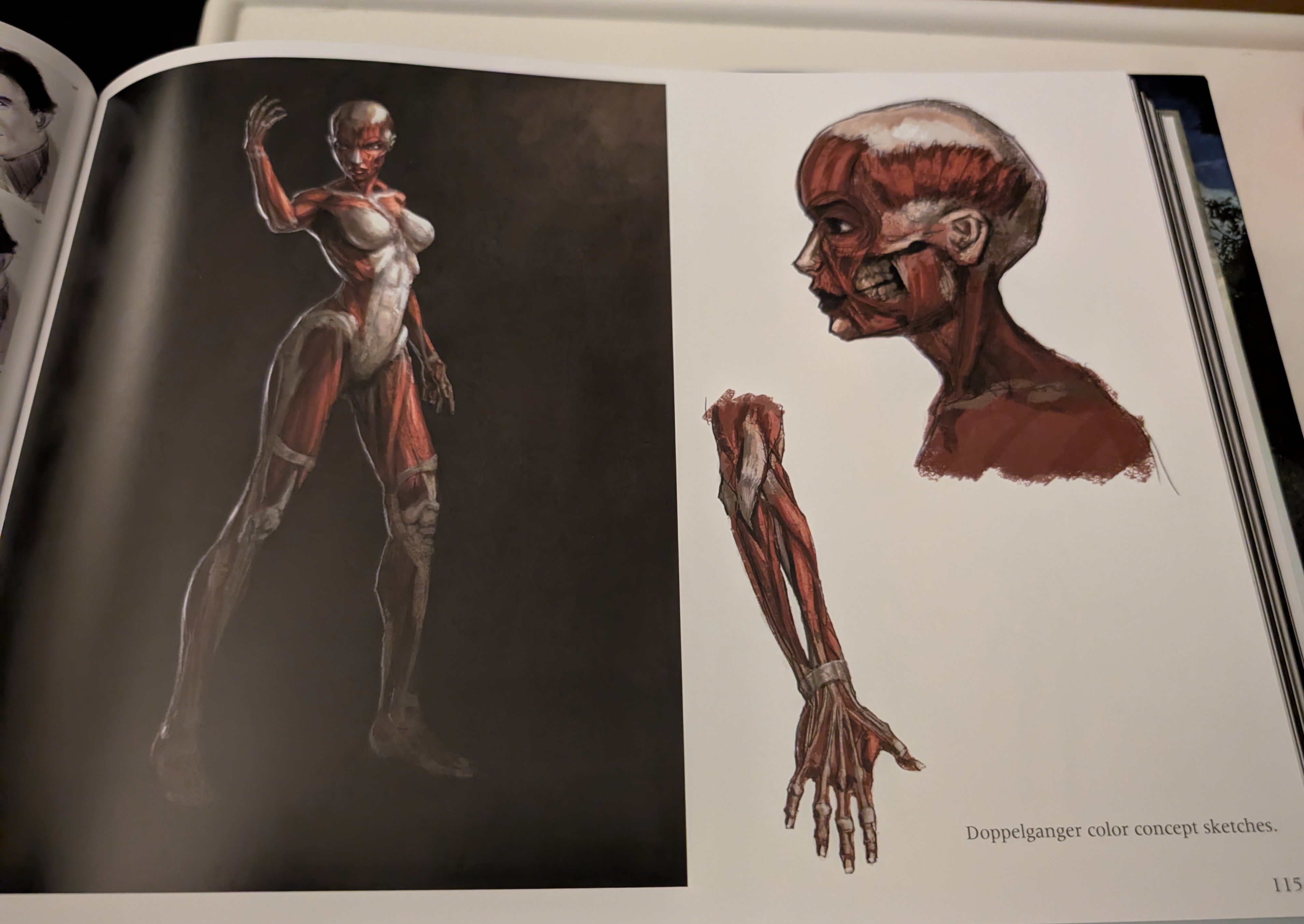
Rebuilt from the ground up: Although it retold the story of the first Tomb Raider, the art was completely reimagined using the Legend engine. I personally did find certain levels feeling more ‘watered down’.
Environmental storytelling: The art team added subtle details – carvings, murals, and relics, to make tombs feel alive with history. These visual cues often tied into puzzles, enhancing immersion.
Outfit nostalgia: Lara’s classic teal tank top and shorts returned, but rendered with modern textures and shading. This was a deliberate nod to her original look, balancing nostalgia with updated realism.
Cinematic cutscenes: The remake introduced fully voiced, cinematic sequences that visually expanded Lara’s interactions with characters like Natla, giving more personality and depth to the story.
Tomb Raider: Underworld

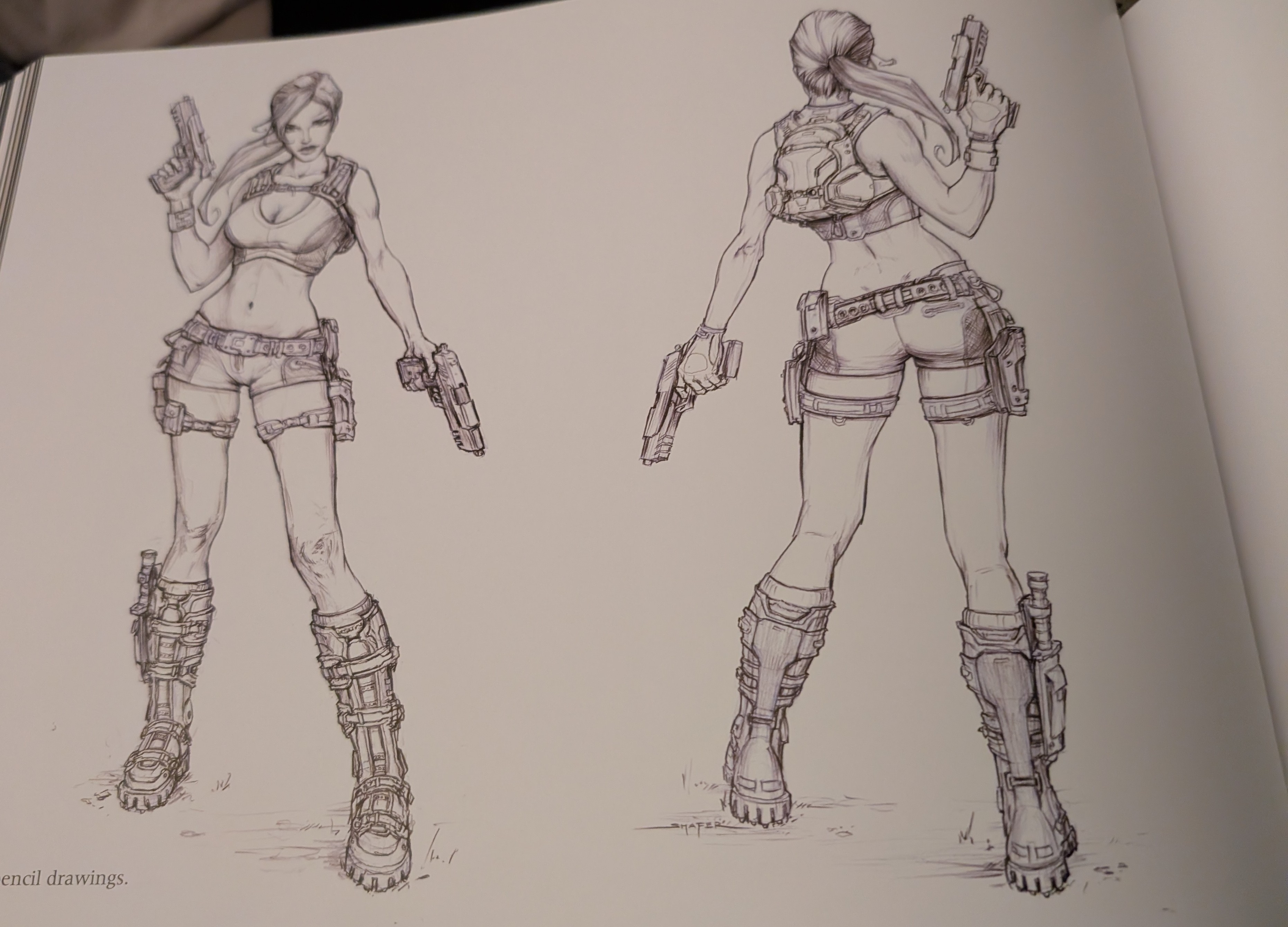
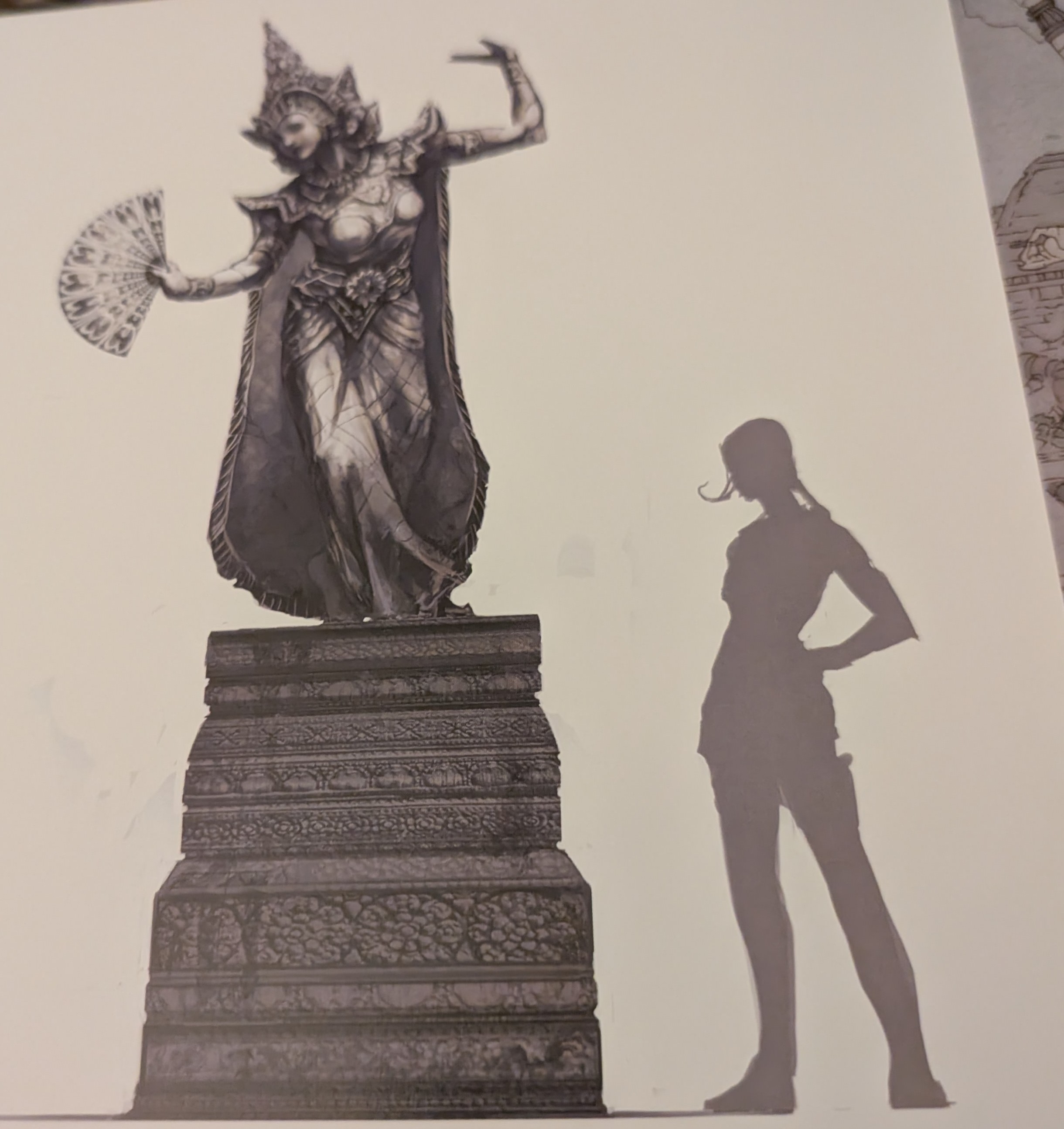
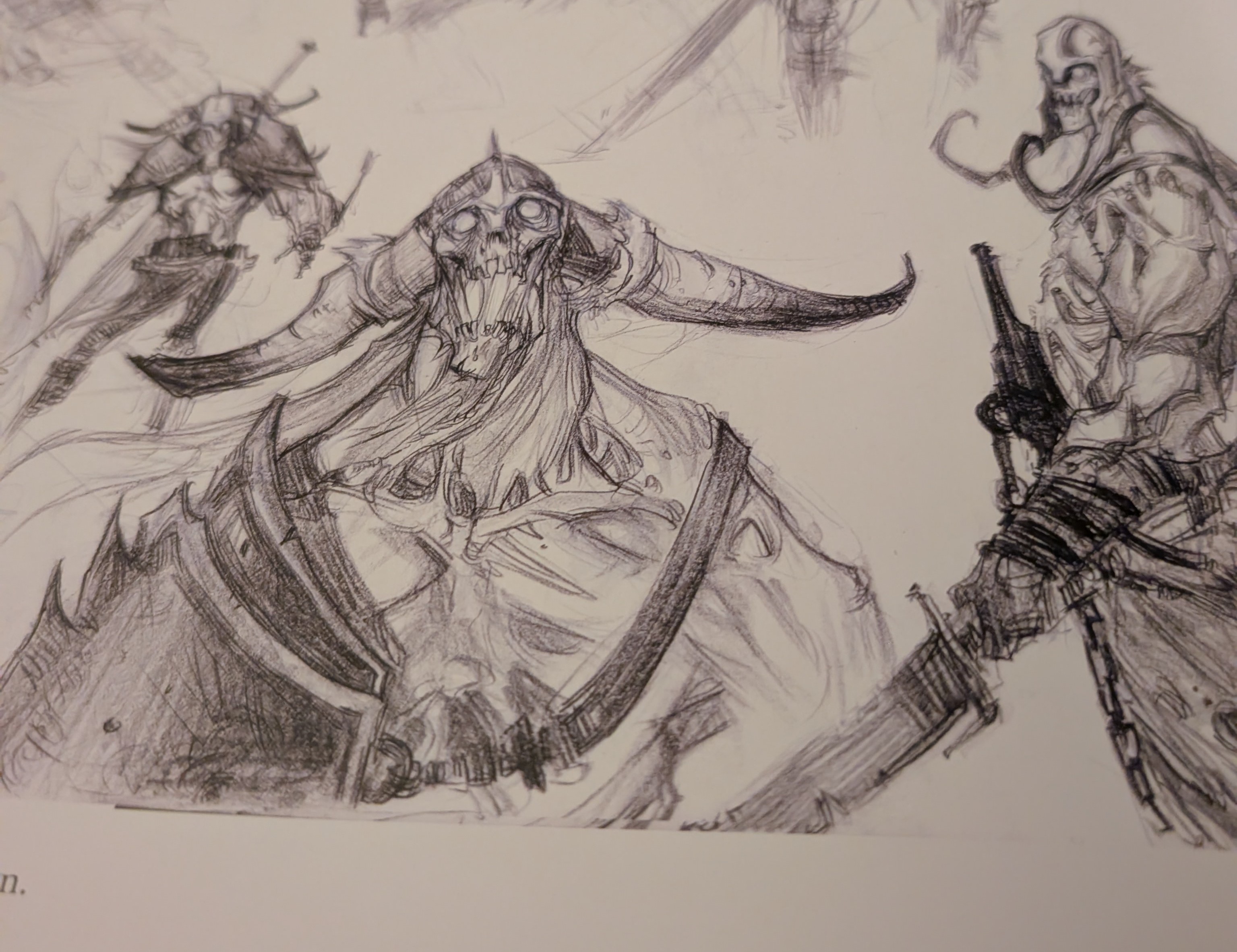
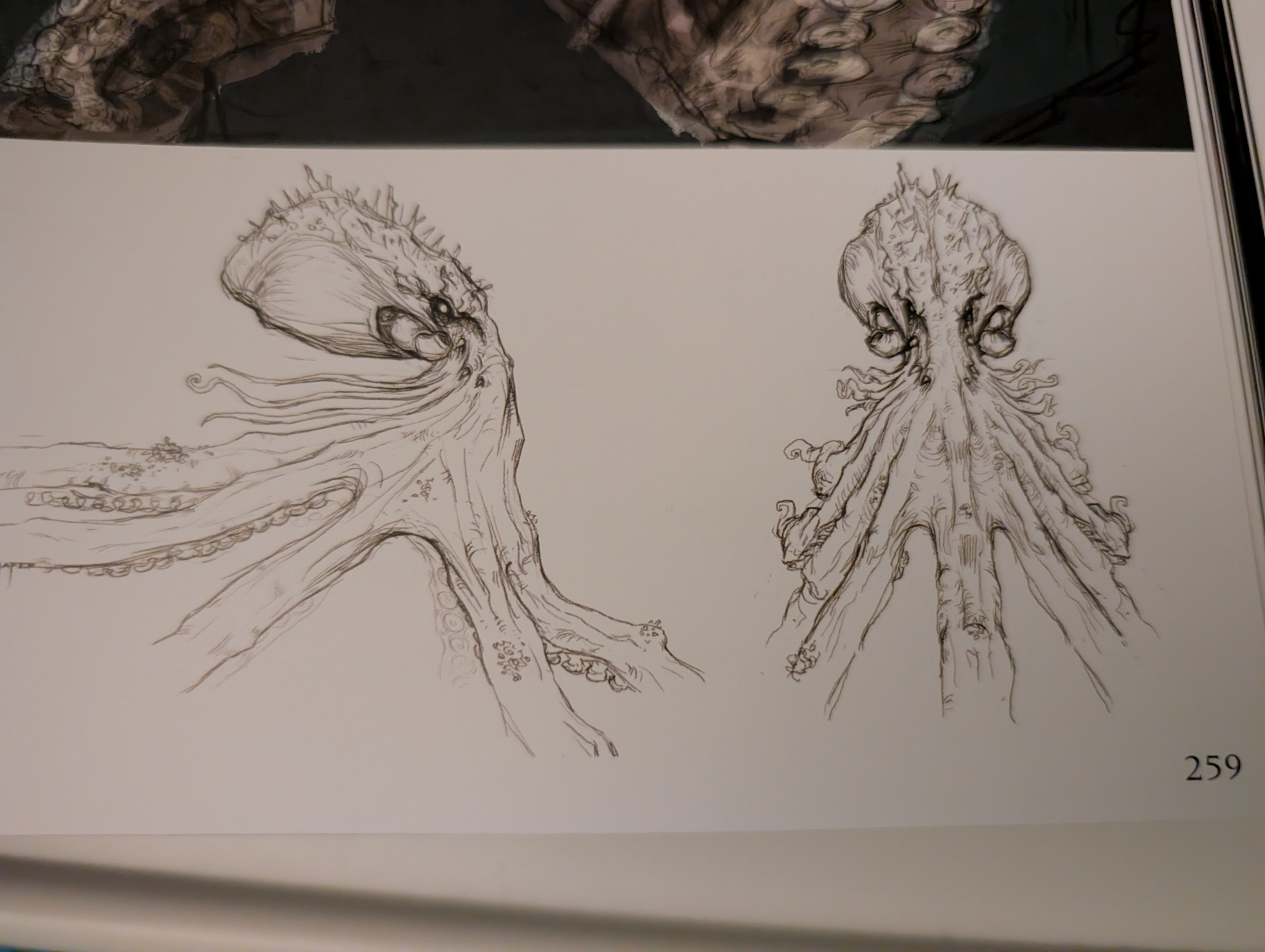
Next-gen realism: Built for Xbox 360, PS3, and PC, Underworld introduced Lara’s most detailed model yet, with advanced shaders, realistic skin tones, and fluid animations. Her movements were captured with motion capture, giving her a lifelike presence.
Dynamic environments: The art team focused on creating expansive, richly detailed worlds, from the jungles of Thailand to the Mediterranean Sea, Mexico, and the Arctic. Each location was designed to feel vast and organic, with weather effects, wildlife, and destructible elements adding realism.
Environmental interaction: For the first time, Lara’s model and the environment were deeply connected. Mud, water, and dirt would cling to her clothing and skin, reflecting the physical toll of her adventures. This was a groundbreaking artistic detail at the time.
Concept art richness: The game’s art team produced extensive sketches and paintings to visualise mythological themes, especially Norse mythology. This guided the design of puzzles, relics, and environments tied to gods like Thor.
 Jasmin Journal