
As this blog was written in 2024, I wanted to point out that we are closer to the year of when the first WipEout game is set – 2052 than when the game was first released – 1995… Now that we got that shocker out the way, let’s go through the rave-inspired soundtrack of WipEout composed by CoLD SToRAGE, which paved the way for electronic music in video games.
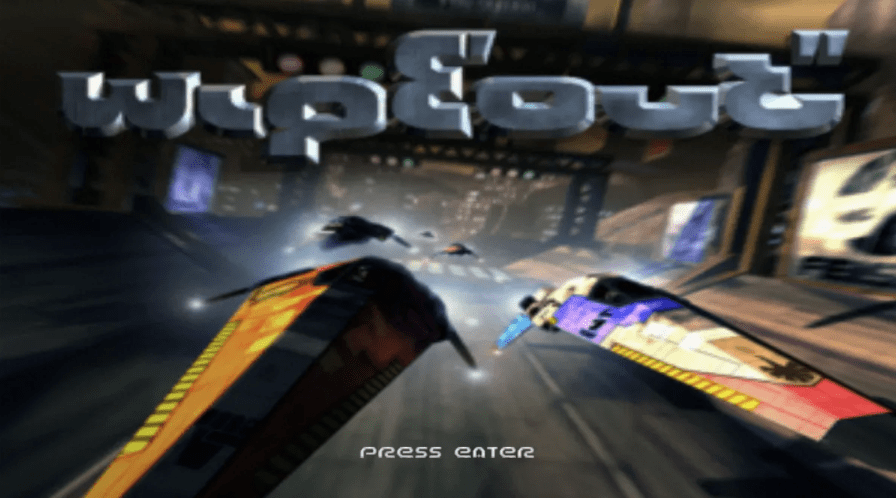
WipEout, first released in 1995 by Psygnosis, is a groundbreaking futuristic racing game that has captivated gamers for decades. Players compete in the F3600 anti-gravity racing league, piloting sleek, high-speed ships on challenging tracks around the world. The game’s innovative design, fast-paced gameplay, and unique visual style, sets it apart from other racing games of its time.
Cool fact: The original prototype of the game was shown in the movie Hackers. It was developed on a high-end SGI server, this prototype enabled the team to experiment with tracks and gameplay before transferring it to the PlayStation. Consequently, there are elements and graphics in the movie that are not present in the final game, such as the “high score smashing” sequence.

One of the standout features of WipEout is its incredible soundtrack, which perfectly compliments the game’s futuristic aesthetic. The soundtrack features tracks from some of the biggest names in electronic music, including:
– Leftfield: Known for the pioneering work in electronic music, Leftfield contributed the track “Afro Ride” to the game.
– The Chemical Brothers: This iconic duo’s track “Chemical Beats” adds an energetic vibe to the racing experience.
– Orbital: Their track “P.E.T.R.O.L.” a fan favourite
– Tim Wright, also known as CoLD SToRAGE, composed several tracks specifically for WipEout, including “Messij” and “Cairodrome.”
The soundtrack journey –
Like many great ideas, WipEout began at the pub.
Developer Nick Burcombe and his colleague Jim Bowers from the Liverpool-based studio Psygnosis were having drinks at The Shrewsbury Arms in Oxton. They had recently received a development kit for Sony’s first PlayStation console and were brainstorming on how best to utilise the new technology. Burcombe recalls that he had just finished playing Mario Kart on the SNES, spending about eight hours trying to beat the 150cc league. It wasn’t until he turned down the in-game music and played his own rave and dance tracks that he managed to achieve this. Burcombe was inspired by this and mentioned ‘‘we should recreate that somehow’. I was trying to explain this to Jimmy at the time in the pub of how excited I was to have this music crescendoing with the victory.”
At the time, the 90s were a transformative era for dance, techno, and electronica music largely in part of the rave culture and club scenes. There were also technological advancements where producing electronic music were more accessible. Synthesizers, drum machines, and software like MIDI allowed artists to create complex and layered sounds.
Tim Wright (CoLD SToRAGE), the composer for the games was actually disinterested in rave music at the time of WipEout’s development. Nick Burcombe was a hardcore raver and dance head and Tim Wright was not and preferred electronic artists such as Vangelis, Jean-Michel Jarre and Tangerine Dream.
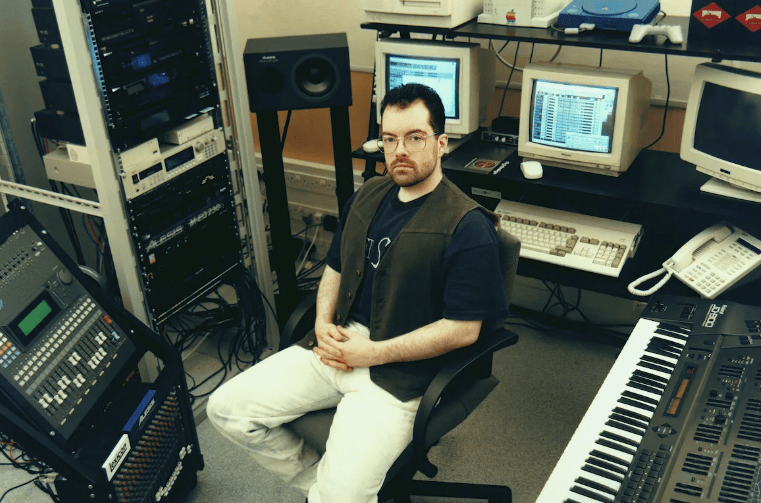
It was only until Wright was taken to clubs in Liverpool with his Psygnosis work colleagues that he understood that it’s not about listening to the music, it was about feeling the music.
Wright mentioned he had a disadvantage compared to the established producers in the rave scene. “In terms of the sounds and percussion that I felt would be necessary to make convincing music, I didn’t have the equipment to produce those natively. For example, I didn’t have access to 808 and 909 drum machines or the TB-303 for bass sounds that were very popular for the more Acid House-type tracks of the time. Sure, I wasn’t really trying to compose Acid House, but those machines were still used a lot in various forms of electronica. I also didn’t have access to a vast array of license-cleared vinyl either.”
This meant that Tim Wright heavily relied on various sample CDs, which were becoming increasingly popular as a quick way to infuse music with a certain vibe. Ultimately, the music he composed for Wipeout blended sounds from sample CDs with 8-bit AMIGA samples, JD800 synth sounds, and various sounds from Korg synths. This mix likely contributed to the unique sound of his music for the game at that time. Additionally, he was crafting his own interpretation of what he believed trance, techno, acid, and drum’n’bass sounded like.
The 2023 release of WipEout – The Zero Gravity Soundtrack aimed to give Wright’s original tracks the recognition they deserve. Renowned producers, including Kode9, μ-Ziq, Brainwaltzera, Simo Cell, Wordcolour, James Shinra, Surgeons Girl, and Dattassette, have been brought in to create modern remixes.
Soundtrack link:

The combination of cutting-edge gameplay and a stellar soundtrack helped WipEout become a critical and commercial success, spawning numerous sequels and maintaining a loyal fanbase.
My personal top 3 tracks:
- Sasha – Xpander
- CoLD SToRAGE – Cardinal Dancer
- The Future Sound Of London – Landmass
Team: Auricom
 Jasmin Journal