The Vikings: Life and Legend exhibition, held at the British Museum, offered a fascinating glimpse into the lives of these legendary warriors, seafarers, and conquerors. I spent a while viewing every artefact and learning about the customs and the intense history through well detailed descriptors next to each pieces. Here are some of my highlights that I enjoyed learning about.

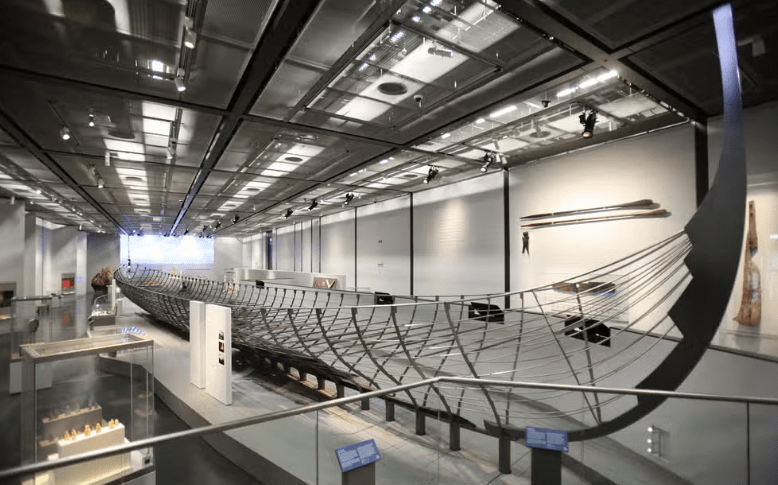
The exhibition showcased an array of artifacts spanning four continents. On display were various swords, axes, coins, jewelry, poetry, and religious images. The centerpiece of the exhibition was a meticulously reconstructed 37-metre-long Viking warship. It’s the largest Viking ship ever discovered. Approximately one-fifth of the original timbers have survived, primarily the keel and bottom planking, but the entire ship’s outline is impressively represented by a steel frame, giving it an ethereal appearance.
Imagine standing next to this imposing ship and envisioning the intrepid voyages it undertook across stormy seas.
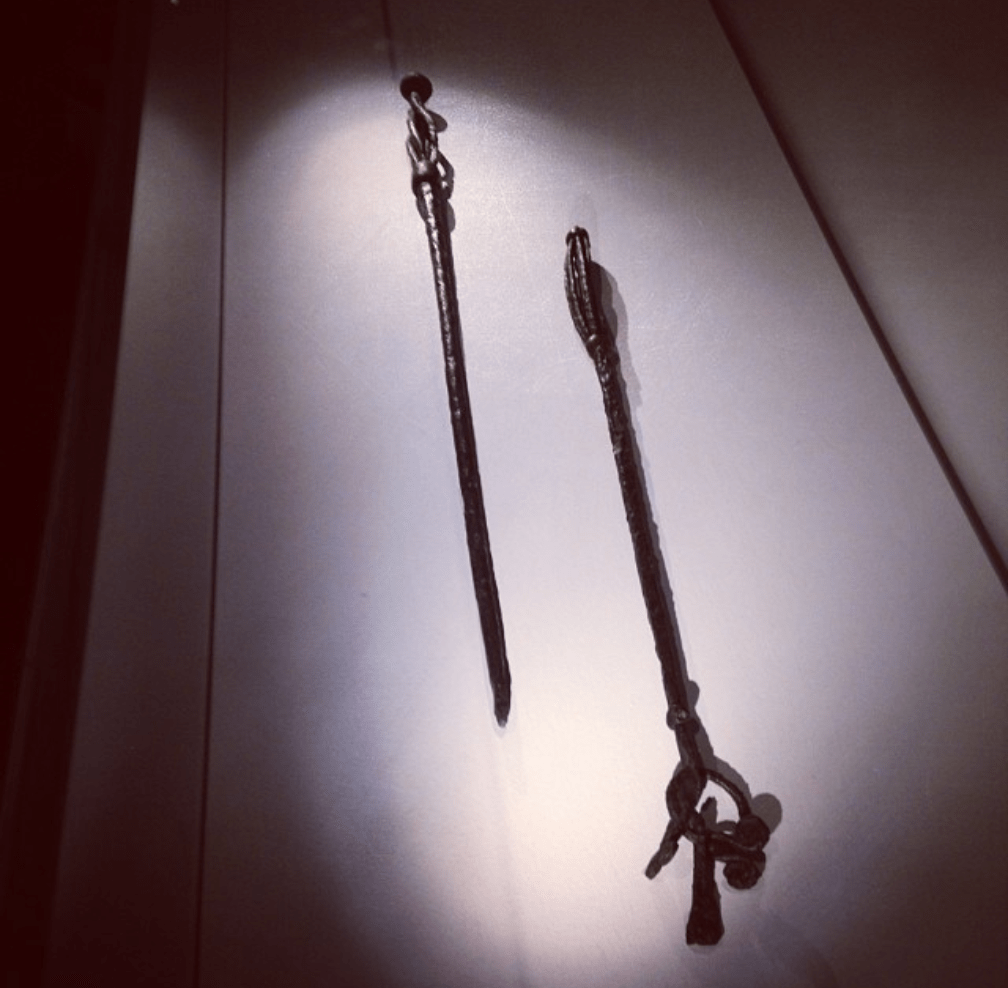
The artifacts on display provided insights into the Vikings’ global interactions, trade networks, and artistic expressions. I surprisingly learnt that the Vikings heavily believed and practiced in magic known as ‘Seithr.’
The exhibition was organised into several sections, which included the following: Viking Homelands, Cultures in Contact, International Trade, Status and Display, The Warship, Way of the Warrior and Viking Belief. The initial rooms were established to acknowledge the Vikings’ connections with the powerful cultures such as the Latin Christendom kingdoms in the west and the distant yet influential Abbasid Caliphate to the southeast.
The fusion of local and foreign elements in Scandinavian culture is beautifully demonstrated by silver hoards from the Vale of York and Lyuboyezha in southern Russia. These collections include items from India, Ireland and Persia. Marked by Christianity, Islam, and Scandinavian pantheism, these remarkable pieces warrant careful examination for their inherent quality as the insights they offer into the cultural, religious, and artistic influences on the Vikings were prevalent to see.
I made sure to take my time viewing all these artefacts as this particular section got overcrowded but I was able to gather enough information to write this blog!
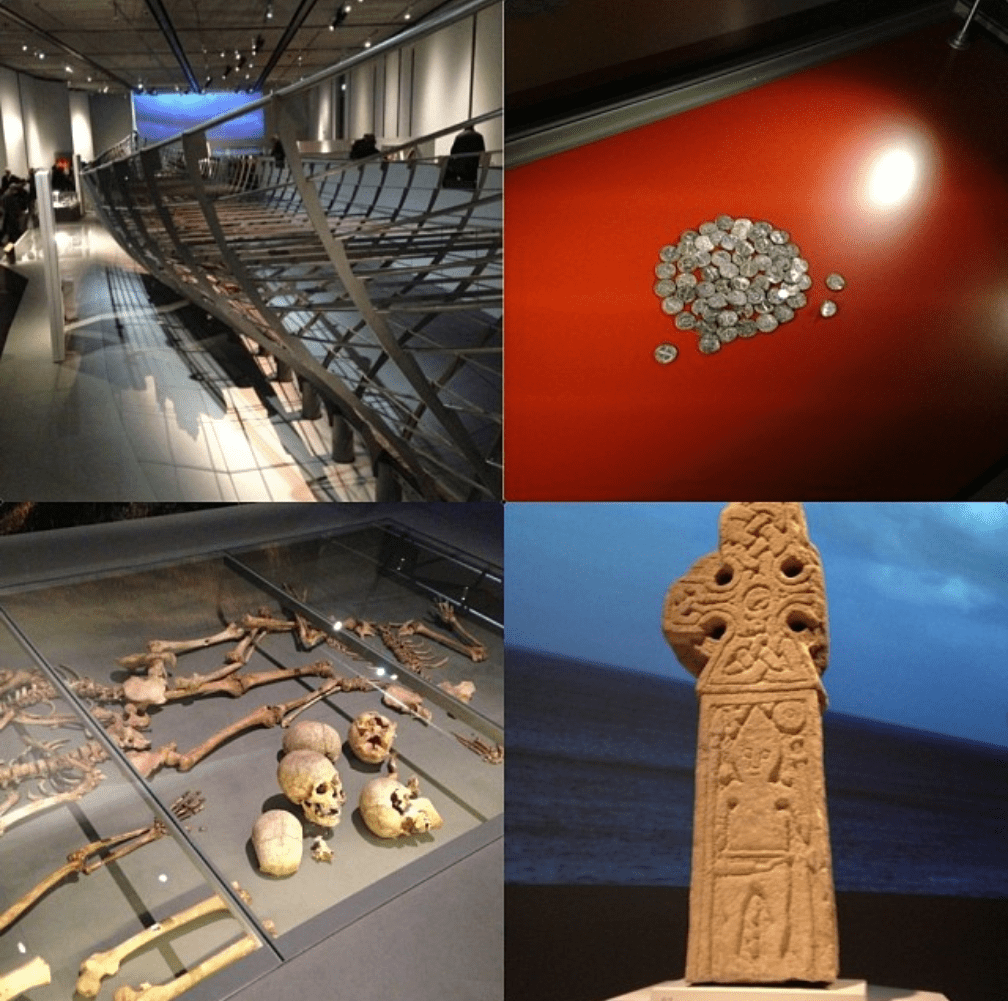
On display and pictured above is the apparent execution burials from Ridgeway Hill, Weymouth. Discovered in 2009, a large group of males, scientifically identified as Scandinavian, were found beheaded, stripped of all valuables, and their heads tossed together. This unusual find raises many questions about the sequence of events it represents. The assumption is that it signifies the execution of an entire raiding ship’s crew following their capture. However, there are no signs of combat on the skeletons. Instead of exploring these possibilities, the display captions emphasise that this discovery demonstrates that the Vikings were not invincible, a point that would likely only surprise those with an overly romanticised view of Viking invulnerability.
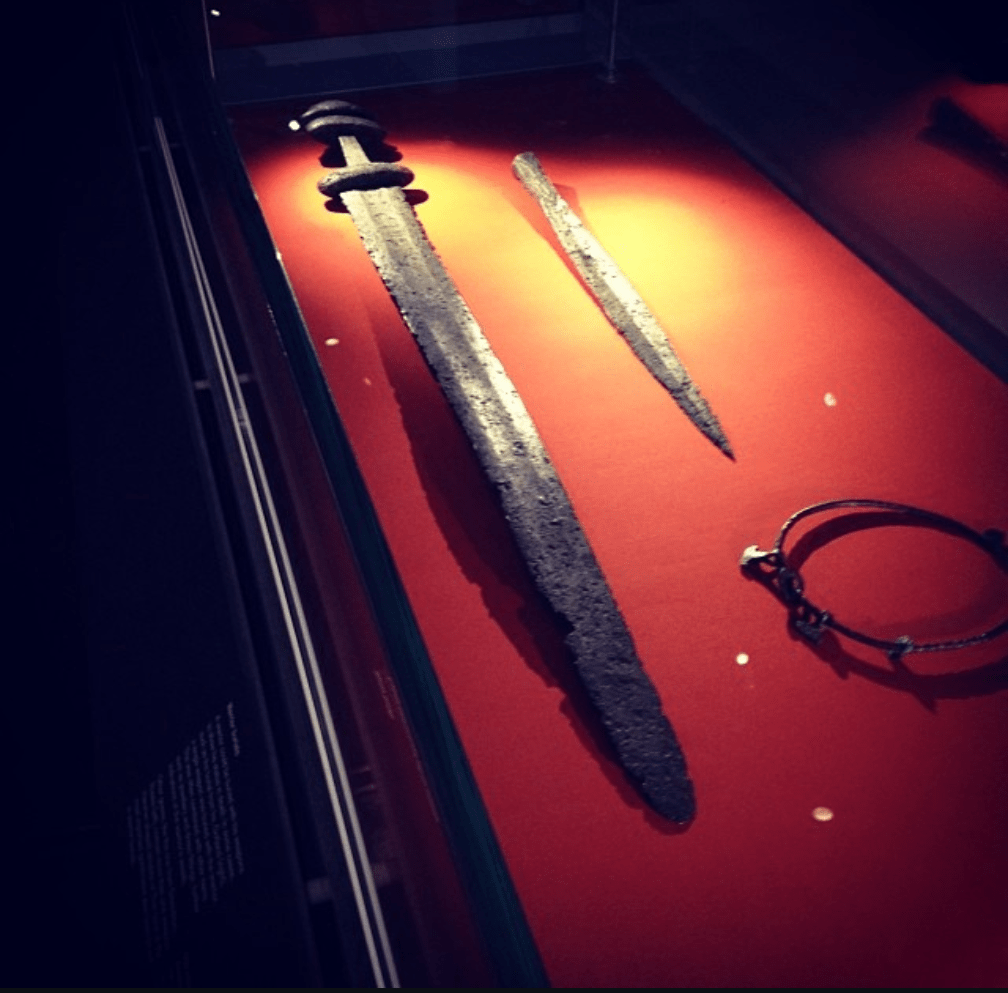
That being said though. The Vikings sure knew how to have the coolest looking long swords in history!
 Jasmin Journal